
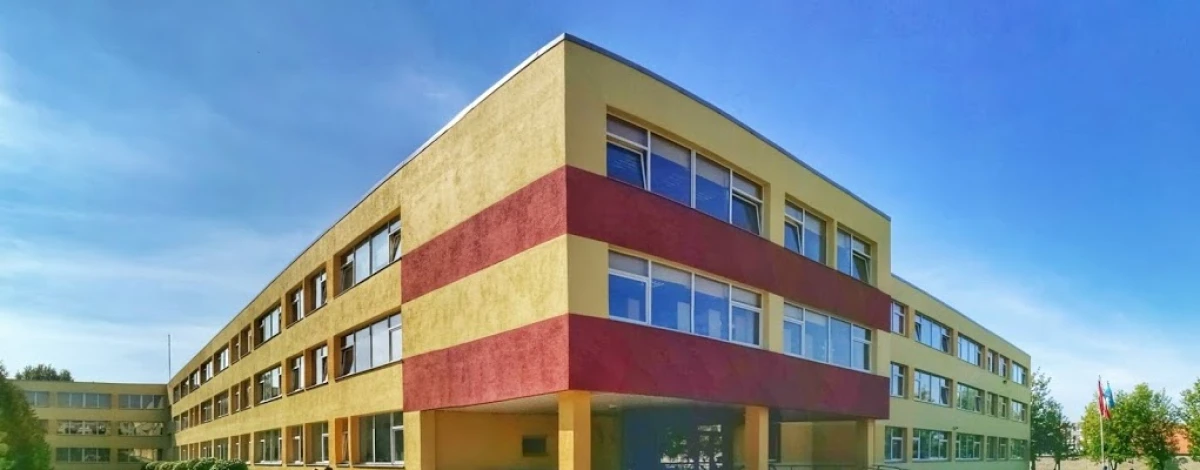
In Rezekne, the school network reform has been postponed due to strong dissatisfaction from parents. The possible merger of the Latvian-language school and the school where children from national minorities historically studied is being discussed particularly sharply.
In Rezekne, the discussion about the reduction and merger of schools is back on the agenda — the number of children in the city continues to decrease, making it increasingly difficult to maintain the current network of educational institutions. However, the attempt to quickly merge two different schools has provoked strong protests from parents, reports the program Reģioni Krustpunktā.
The discussion involves the 5th primary school, where historically instruction has been conducted in Latvian, and the 6th primary school, which previously operated programs for national minorities. Both schools are located in the same neighborhood and are only a few blocks apart.
The local government hoped that after the merger, there would be about 890 students in the school. This would ensure full state funding and avoid new reforms in the northern part of the city for at least ten years.
But parents strongly opposed this.
In just two days, they gathered over 600 signatures against the merger starting from the next academic year. After this, the city leadership quickly abandoned the idea of immediate reform.
The main source of tension became the language issue.
The head of the parents' council at the 5th school, Yaroslav Volkov, openly stated that many fear the dominance of the Russian language after the merger. According to him, some parents are not confident that all educators will be able to work effectively in Latvian.
"When children move into an environment where the language of the national minorities dominates, it raises a lot of concern," noted Volkov.
Additional anxiety is caused by old conflicts between students from the two schools.
"Back then, the schools were at odds with each other... there were real physical fights," recalls Volkov, who once studied at the 5th school.
At the same time, some parents believe that the idea of merging itself is not a problem — the question is only how to do it.
The head of the parents' council at the 6th school, Alena Khayte, says that the transition should be gradual: with joint events, adaptation for children, and time to get used to it.
"There should be some transitional period. A year, two, or three," she believes.
At the 6th school, they assert that the transition to instruction in Latvian is going well, although the Russian language is still heard more often in the hallways than in the neighboring school.
The school principal, Tatyana Tokareva, admits that the merger would be a complex psychological process: the schools have different traditions, environments, and identities.
Meanwhile, the demographic situation continues to worsen.
According to the Rezekne Education Department, if a few years ago more than 300 children were born in the city each year, in 2024 there will be about 200. In the coming years, the number of first-graders will noticeably decrease.
The opposition believes that the pause in the reform is related not only to the protests from parents but also to politics. Some deputies suggest that the city leadership does not want to conflict with voters before the elections to the Saeima.
The city hall denies this, but acknowledges that the issue of school mergers will still have to be revisited in the fall.
Rezekne is becoming one of the examples of how demographic decline is gradually changing the entire education system in the regions of Latvia.





Leave a comment