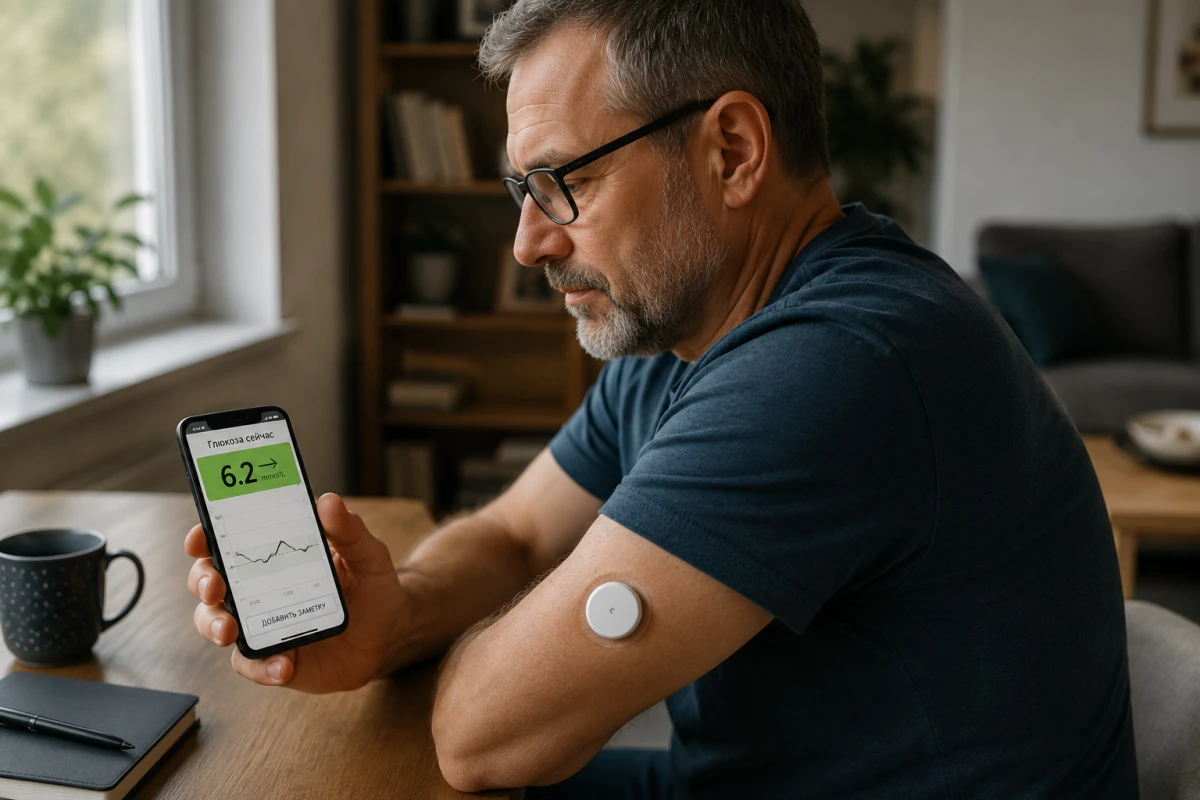
The Ministry of Health of Latvia intends to seek additional funding for type 1 diabetes patients this year. This concerns the expansion of compensation for continuous glucose monitoring sensors and insulin pumps, which are currently available only to limited groups of patients.
The issue of accessibility to modern technologies for people with type 1 diabetes has once again come to the forefront after nearly 14,000 people supported a proposal for state compensation for glucose sensors and insulin pumps for all patients on the public initiative portal "ManaBalss.lv".
Currently, state support is only available to a portion of patients, writes Diena.
Insulin pumps are compensated until the age of 24, while continuous glucose monitoring sensors are only covered until adulthood. After that, patients are effectively left without assistance, even though the condition remains lifelong.
The author of the initiative, Anniya Roga, emphasized at a Saeima commission meeting that modern technologies are necessary not only for children but also for adult patients. According to her, the costs for sensors can reach approximately 100 euros per month, which becomes a significant financial burden for many families.
The problem is particularly acute for young adults who lose state support after turning 18 but often no longer have disability status.
The Ministry of Health acknowledges that the issue requires a solution. Parliamentary Secretary of the Ministry of Health Liga Abolinya stated that the agency is currently working on a scenario for gradually expanding support.
Initially, a compensation option covering 75% of the cost of devices for all patients is being considered, followed by a transition to full coverage of expenses.
In fact, this is an attempt to align the support system with the real needs of patients, as modern technologies allow for better disease management and reduce the risk of severe complications.
The Ministry of Health emphasizes that support has already been gradually expanded in recent years. For example, pregnant women, as well as patients after transplants and pancreatic surgeries, have been included in the program. However, the agency admits that the problem is not a lack of understanding of the importance of diabetes but rather limited budgetary capabilities.
The issue has already been discussed in the Saeima, and the government has been urged to reconsider the Cabinet of Ministers' regulations to ensure broader access to necessary devices.
Currently, the Ministry of Health is calculating how much funding will be needed to include these expenses in next year's budget.
For diabetes patients, this means that the topic has begun to move at the political level for the first time in a long time, and the issue of compensation may no longer only concern children and specific benefit groups.