
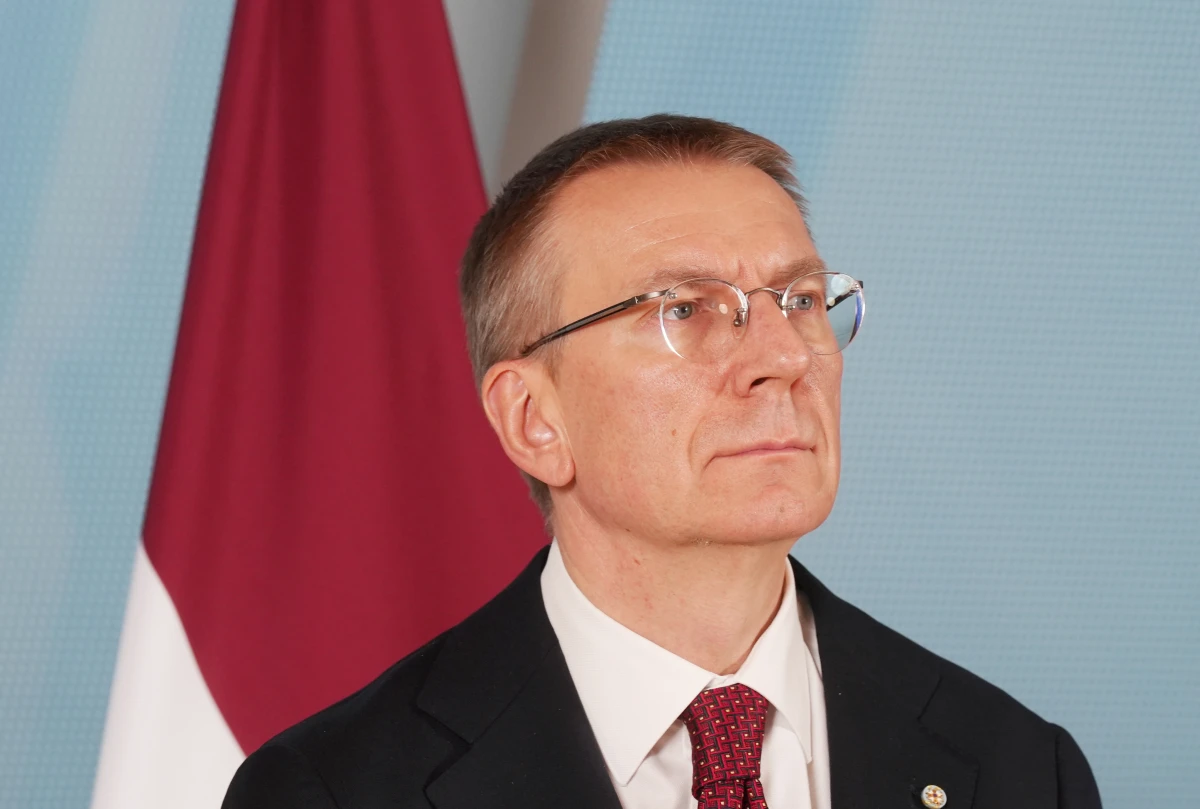
"Every resident of Latvia is important, so it is necessary to listen to those groups of patients and their treating doctors whose needs have not yet been heard," the president stated during a meeting with Health Minister Hossam Abu Meri.
After the meeting, presidential advisor Mārtiņš Drēgeris stated that officials discussed the state compensation system for medications and medical devices, as well as opportunities to increase the transparency of the system and expand the support provided.
Rinkēvičs later stated that significant changes have been made to the system of reimbursable medications in recent years: the procedure for prescribing medications has been changed, additional tools for supporting patients have been found, and funding from the state budget for covering expenses on reimbursable medications has significantly increased.
"Every resident of Latvia is important (which means Russians, Belarusians, Tajiks, and representatives of other nationalities are included in this list, editor's note), so it is necessary to listen to those groups of patients and their treating doctors whose needs have not yet been heard," the president emphasized.
During the meeting, Rinkēvičs also listened to information from Abu Meri about the process of identifying all problematic issues in the industry to prepare priority measures for the sector for 2027-2030.
Abu Meri and Rinkēvičs agreed that significant work has been done in the area of reimbursable medications, but it is necessary to continue improving the transparency of the system and purposefully expand support for patients, said Oskars Schneideris, a representative of the Ministry of Health, to the LETA agency after the meeting.
The ministry promises that the working group will continue to work on clarifying the criteria, priorities, and funding scenarios so that the Ministry of Health can prepare a balanced and long-term proposal for improving the reimbursement of medical devices for diabetes patients.
Currently, continuous glucose monitoring systems are provided to certain groups of patients: children under 18 years old, women with type 1 or type 2 diabetes during pregnancy and postpartum who are receiving insulin therapy, patients after organ transplants, and patients after pancreatic resection.
In turn, state-funded insulin pumps are available to diabetes patients up to 24 years old if they were provided to them earlier, before reaching the age of majority.
Thank you for the country's leadership remembering diabetics of various nationalities, but perhaps over time they will also think about patients with other diagnoses, as well as healthy people... Maybe you will start with prevention - publishing necessary health information not only in the language of the titular nation... We are waiting?











Leave a comment