Since the introduction of electronic registration on October 15 of last year, 60,445 vehicles have crossed the border of Latvia in the direction of Russia and Belarus, the Road Transport Directorate reported to LETA.
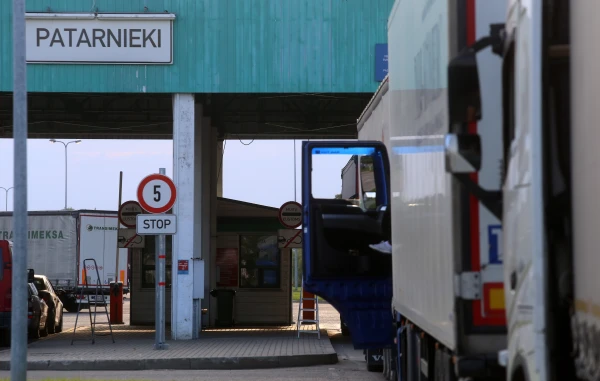
Among them, the largest number — 24,147 freight and passenger vehicles — was registered in the queue and crossed the border in the direction of Belarus through the "Paternieki" border crossing.
In the direction of Russia, the most vehicles were registered at the "Terehovo" border crossing, through which 20,923 vehicles passed, as well as at the "Grebnevo" crossing, where 15,375 freight and passenger vehicles crossed the border.
On Wednesday, the first meeting of the advisory council of the electronic queue system will take place under the guidance of the Road Transport Directorate. The council was created to facilitate inter-agency coordinated functioning of the system.
The council includes representatives from the State Border Guard, the Customs Administration, the Ministry of Transport, the Road Transport Directorate, and the Latvian State Radio and Television Centre (LVRTC).
As previously reported by LETA, since October 15 of last year, mandatory registration in the electronic queue has been introduced for vehicles before crossing the external border of Latvia.
Vehicle registration is carried out in the "lvrobeza.lv" and "lvborder.lv" systems. The electronic queue is in effect at the "Grebnevo", "Paternieki", and "Terehovo" border crossings.
The obligation to register the time of crossing the border in the electronic queue will apply to all drivers wishing to cross the external border of Latvia from October 15, 2025, except for vehicles that are subject to legally established exceptions, such as horse-drawn transport, bicycles, as well as individuals with European Commission passports and others.
At the same time, the registration obligation also applies to buses conducting international regular passenger transport, however, they are exempt from the service fee.
The Road Transport Directorate implements a unified state policy in the field of international transport, licensing of commercial road transport, as well as public transport planning.