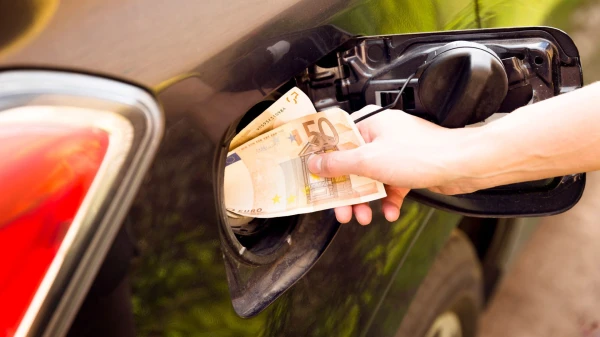
Fuel prices at Latvian gas stations continue to rise rapidly, which is severely impacting nearly all people and sectors.
Last week, the retail price of diesel fuel approached 2 euros per liter. To bring down fuel prices, the Ministry of Finance (MF) proposes to reduce the excise tax on diesel fuel by approximately 15% starting from April 1. But temporarily.
"Is it even worth sowing anything?"
As stated by the chairman of the Zemnieku saeima organization, Juris Lazdiņš, many farming households are seriously considering whether it is worth growing anything this year at all?..
In this situation, the government of Latvia, despite budget issues, is forced to take measures to reduce prices.
The first step to stabilize prices in the form of a reduction in the excise tax on fuel will be taken starting April 1, — reported Minister of Finance Arvils Ašeradens and Minister of Economics Viktors Valainis. However, so far this only concerns diesel.
The Minister of Finance points out the obvious: the rise in fuel prices creates a significant burden on both businesses and households, and also affects the functioning of the public sector, including emergency medical services and security. Estimates from the MF indicate that without intervention, additional costs for the Latvian economy could reach approximately 50 million euros per month.
Reducing the Excise Tax Will Lower the Price by 8.6 Cents per Liter
On March 23, the Ministry of Finance announced: a draft law will be prepared aimed at reducing excise taxes on diesel fuel by approximately 15%. Temporarily.
It is planned that the reduced rate will be in effect from April 1 to June 30, 2026. The reduction will also apply to marked diesel fuel used in agriculture.
The excise tax rate on diesel fuel is planned to be reduced from 467 euros to 396 euros per 1000 liters.
According to MF calculations, this could reduce the price of fuel by approximately 8.6 cents per liter (including value-added tax).
The task was previously stated as follows: to ensure that the price does not exceed 1.80 euros per liter. Analysts have calculated that this is the price above which negative consequences for the Latvian economy are inevitable.
In connection with the upcoming reduction in excise tax, the MF explains: after the reduction, the excise tax in Latvia will be the lowest in the Baltic States. Currently, the lowest excise tax rate on diesel fuel in the Baltics is in Estonia — 428 euros per 1000 liters, while in Lithuania it is 553.6 euros.
At the same time, the Baltic States — Lithuania, Estonia, and Latvia — are coordinating their actions to mitigate market shocks and the impact of fuel prices on the population. Estonia initially planned to increase the excise tax on fuel starting May 1, but is currently planning to abandon this step, while Lithuania is moving towards similar decisions as Latvia.