
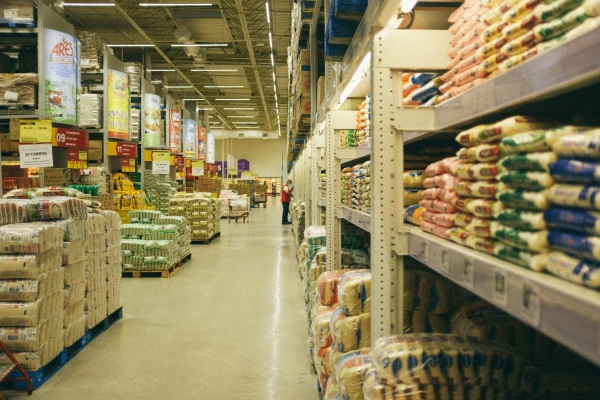
Although the military conflict in the Middle East may drag on — March 28 will mark a month since the first strikes by the U.S. and Israel against Iran — it has not significantly affected retail prices in Latvia so far. However, in the long term, such an impact is possible, notes Raimonds Okmanis, chairman of the board of SIA Latvijas Tirgotāju savienība.
"If the hostilities significantly exceed one month, their consequences may become noticeable in the local market, primarily due to rising energy resource prices and transportation costs. As we are already seeing now, in such situations, energy resource prices tend to rise, and this gradually reflects on transportation and logistics costs. In retail, such changes usually manifest with a time lag," explains Okmanis.
According to his forecast, the impact on prices in Latvia may become apparent in about three months: "This means that consumers may feel the potential price increase by the end of summer or in autumn, when the increased costs will have fully reflected in the supply chains."
At the same time, if the escalation of the conflict is resolved in the near future, fluctuations in fuel prices will be short-lived and will have little effect on retail.
"The market is capable of adapting quite quickly to such shocks if they are not prolonged," notes Okmanis.
Currently, the retail sector in Latvia continues to operate stably, and traders are closely monitoring global processes that may affect supplies and price levels. If the conflict in the Middle East does not drag on, significant price fluctuations for Latvian consumers are not expected in the near future. However, in the case of prolonged geopolitical tension, the impact on retail prices may become more noticeable as early as this autumn.












Leave a comment