This is a story about how, with oncology and a second group disability, one can suddenly become a sports instructor in another country. Then (again unexpectedly) start filming videos on YouTube. A story about why a man in the prime of life with a Ukrainian passport is not fighting but has legally left his homeland.
This is a simple human story about human possibilities that are limited only by intentions. In this case — the intention to live happily in their new life. A story about constantly stepping out of the comfort zone, trying new things, never giving up, and finding joy in small things.
It’s a tale of an ordinary family from Donbas who have been living in Latvia for several years, escaping from the war, and how they bought a hundred-square-meter house for five and a half thousand euros.
Language will take you to Jekabpils
They have been in Latvia since 2022. "We arrived on June 6. We planned to stay for a maximum of a year — we didn’t intend to stay longer. We thought: it will get calmer, we’ll return home."
They chose Latvia based on Google recommendations: "We just asked where we would feel more comfortable." Alyona is 33. Her husband Anton is two years older. Their son Kirill is 10 years old. That’s the whole family.
"We spent a day in Riga and then headed to Jekabpils. We were buying tickets, and at the ticket office, they said — to Krustpils. How were we to know that it’s practically the same thing," Alyona says, laughing.
They arrived. At the police station, they were told there were no places in the city. They were put in a police car and taken to a village. There, they found jobs — in the fields, picking strawberries. They were paid 50 cents per kilogram. "By evening, everyone’s legs hurt, and our backs are breaking, but we have to work."
The strawberry season ended — and so did the job. "Where to look? How to search? But the language will take you to Kyiv." They moved to Jekabpils and rented an apartment. They say they are glad they didn’t stay in Riga and ended up here: "The capital is not for us at all. We are from Ukrainisk — a small mining town of eight thousand people."
The family still lives in this apartment. They found it through a help center for Ukrainians. The owner immediately warned them: the accommodation might not be to their liking — it has stove heating, the repairs are not ideal, and other refugees had refused it.
Do it — don’t just think
We are sitting in the kitchen together, drinking coffee and eating cake. Me, Alyona, Anton (today is one of his rare days off). Their son is at school.
"The apartment suits us. We pay 100 euros a month in rent plus utilities. We are used to stove heating. However, it’s unusual to use firewood — we heated with coal at home. My husband was given six tons for free at the mine each year," Alyona continues.
In the next room, parrots chirp in the background, and the sound of church bells can be heard outside — opposite is an Orthodox men’s monastery.
Anton has two higher education degrees. He is a mining technician-technologist and a labor safety engineer. Back home, he was responsible for safety at the mine. Here, he works at a sawmill. He had never dealt with this before. He had to start from scratch. From the very basics, from the very bottom. He is making progress. "I’m not doing very well with the Latvian language yet. They offer courses at work. But when? I have shifts for so many hours."
He is succeeding because he has tamed his pride. He doesn’t think in terms of "not for my size" and "my berry didn’t grow for you." He is not afraid of any work, even unskilled. He is not afraid to start over. He quickly adapts to circumstances. He does — and doesn’t just think, studying theory alongside practice, enriching his knowledge of the subject.
We are happy with what we have
"People often ask — why aren’t you fighting?" I inquire.
"They asked at work. I explained." Anton left Ukraine completely legally. According to the law, if one of the spouses has a first or second group disability and leaves the country, the other has the right to leave as an accompanying person. That’s how they packed their bags — Alyona, Anton, and their son Kirill.
Alyona has oncology. She doesn’t want to talk about it: "I want to forget about it."
After chemotherapy, the disease went into remission. Alyona came to Latvia already with a second group disability, but her term expired here — she had to undergo examinations and obtain a Latvian disability group.
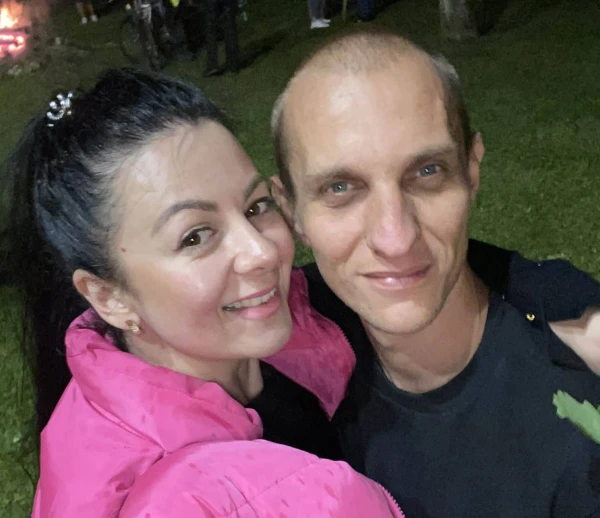
They are a happy family. They have faced too many worries, sorrows, and trials. "We’ve been together since school. I was 14 when we started dating. And here we are — still together," Alyona says. Anton nods, smiling.
Meanwhile, I look up studies online about couples facing oncology and other severe diagnoses: when a wife is seriously ill, in about 20% of cases, the relationship ends in divorce or separation. She is very lucky with her husband. Just as he is lucky with his wife. They are also a wealthy family. No, it’s not about money. There are things that are worth much more. They are still young, yet they have been together for twenty years.
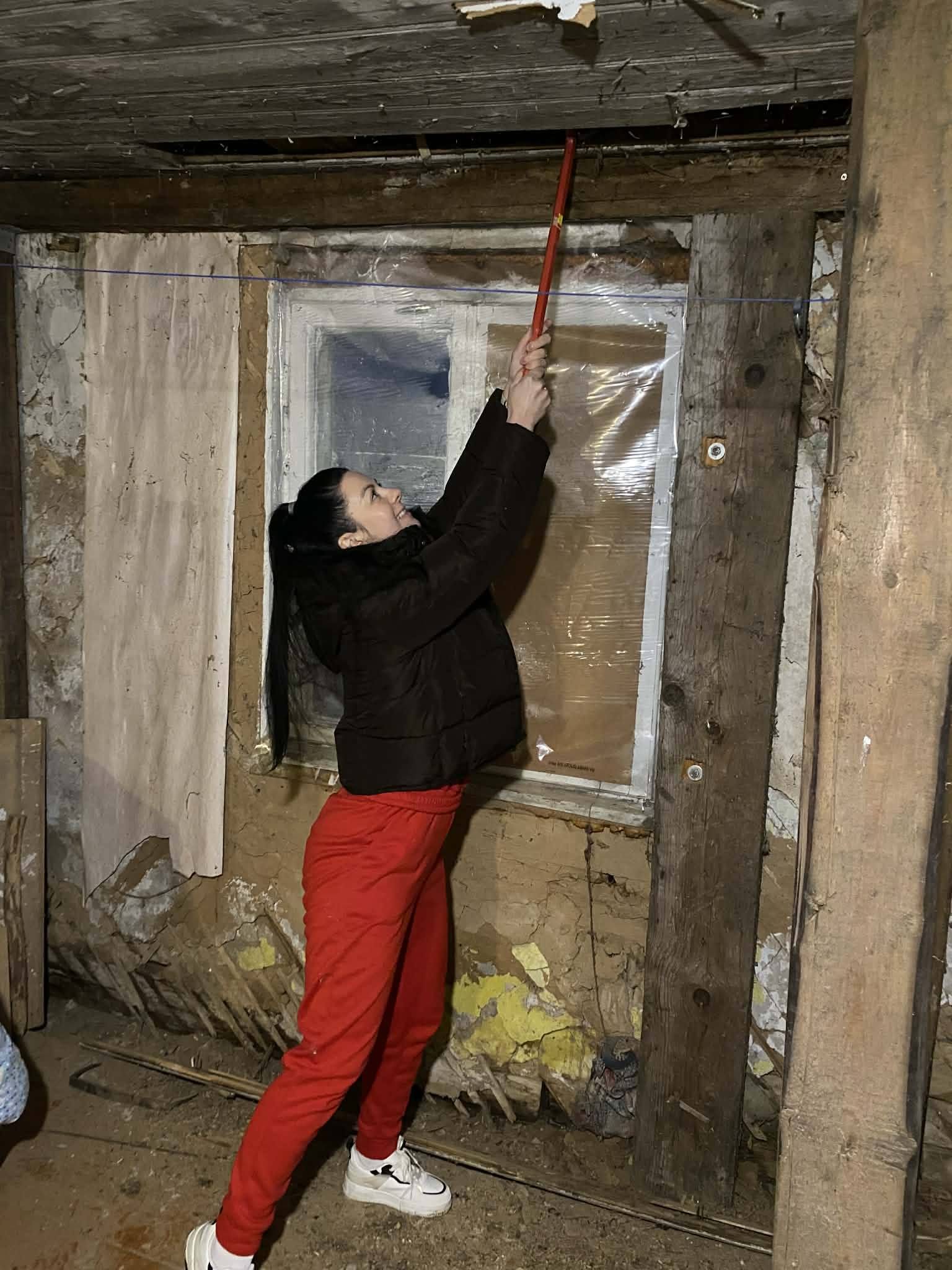
“Alyona. A house built by hand”
The YouTube channel happened by chance. When they bought the house, Alyona filmed the decoration of their new home on her phone — just for herself: it’s interesting to look back and see how it all started and what it eventually turned into. The phone ran out of memory, and to store the videos somewhere, she hastily created a channel. Exclusively for her personal archive.
Until their city was occupied, they hadn’t even thought about buying anything in Latvia — they planned to return home. They thought her husband was earning money.
"We didn’t have much money, and with my health problems, we couldn’t spend anything on real estate. We looked at a house in the area. What attracted us? 105 square meters of space, 19 acres of land, utilities already connected. But the price was unaffordable for us — 10 thousand euros. One day I just wrote to the seller: ‘We’ll buy it for five.’ He replied: ‘I’ll sell it for five and a half.’ That’s how they became owners of their own house. They can’t live in it yet, but they can renovate it — making their dream house.
Unexpectedly, the video on YouTube about the house gained — by her standards — a huge number of views. Thus, a public channel about their life appeared. Although the theme of the videos has become very diverse over time, the name remained the same — “Alyona. A house built by hand.”
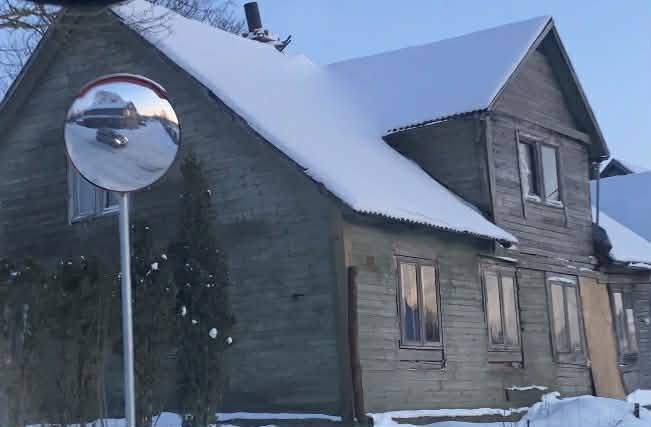
The very house: they asked for 10 thousand, paid five and a half. Photo by the author.
The female contribution to the family business
In their blogs, they don’t complain and don’t play on sympathy. They don’t blame everyone for all their troubles. They don’t think that everyone owes them. They don’t flaunt their status. They don’t tell others how to live but simply try to live their new life. With ordinary daily difficulties, problems, challenges, joys, and achievements. They are open, ready to listen to advice, and willing to hear.
I had been observing them for a long time. I kept postponing it, but finally wrote to say I wanted to make a piece about them. "We don’t mind. It’s nice to meet you." Ordinary people are always more interesting, even if it’s a two-hundred-kilometer trip to see them.
According to Alyona, YouTube quickly offered monetization. "I’ve never done this before, I don’t understand anything about it — this channel is my debut. I would never have dared to film in Ukraine; I would have been too shy."
Alyona is not shy to talk about her YouTube income — it’s modest. "I recently submitted my first tax declaration." They even had their first advertiser: they offered to install a plastic window in the house in exchange for advertising.
The ability to find joy in small things, small victories, to set goals and pursue them — these are valuable qualities. "If I gather 5,000 subscribers, I can start collaborating with Depo, I found out. By the way, 79% of my viewers are Latvians."
She tries to contribute financially to the family: "YouTube brings in a hundred euros a month, about the same from the gym where I conduct individual training sessions. Plus, there’s the allowance as a second group disabled person. That’s my income. I want to help my husband — he works for all three of us."
Coincidences and patterns
Let’s be honest — refugees are not liked anywhere. In any country. That’s human nature. It’s related to psychology, sociology. And, ultimately, to economics. Prejudices, stereotypes, fear of competition, a lot of things. At the same time, Anton says they haven’t faced any negativity directed at them yet.
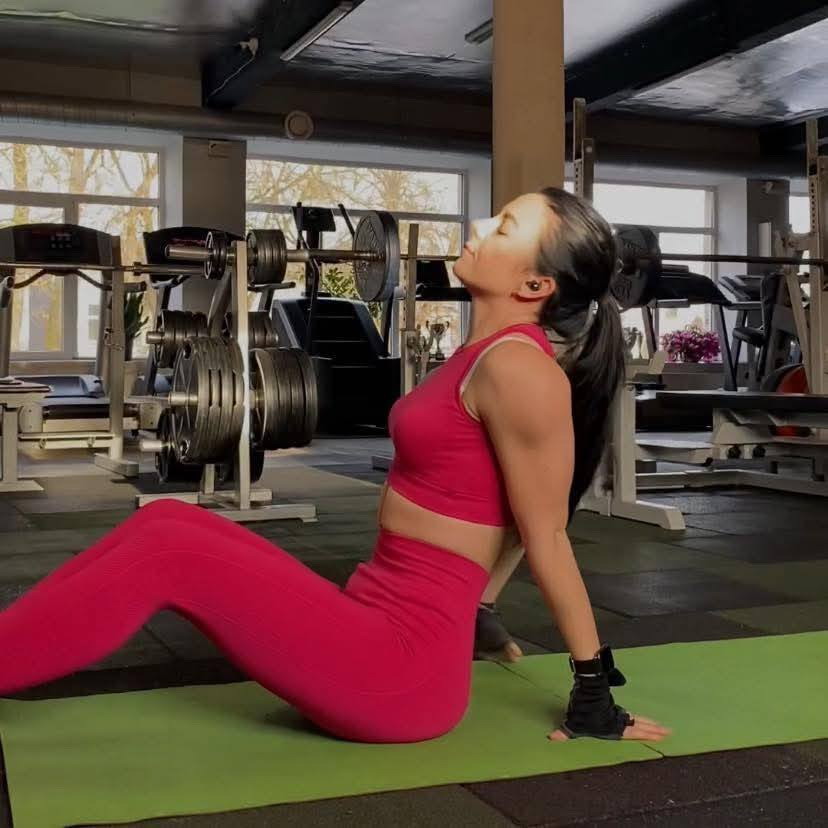
Life will make you become a fitness trainer. Photo by the author.
Alyona also got into the gym by chance. The owner of the local fitness center provided free memberships to Ukrainians for two years. "I went to train. It was truly a way out of my comfort zone — I had never done it before." Then results appeared, and later the girls suggested conducting private training sessions. "I have understanding — I am a medical professional by education and worked in my field in Ukraine. But to teach others… I could never have imagined that." The first client came.
All these coincidences are actually a pattern. This is the result when people don’t give up, aren’t afraid of the new, pursue their goals, and constantly learn. Alyona even passed her driving test. Although she had never driven a car before. "My husband said: no automatics, learn on a manual. I passed on the first try."
A happy family
In Latvia, many things seemed unusual at first: "Almost every second person has a car; we didn’t have that. In summer, the daylight is very long. You drive on the highway: fields, forests — and suddenly, bam, a standalone house, and people live in it." They still don’t feel at home here. But they wouldn’t trade Latvia for any other country.
They are not afraid to appear foolish in some things and calmly admit if they don’t understand something about local realities. This is where humanity, sincerity, and openness lie. Occasionally, they sprinkle their speech with words like: "scooped up," "invested," "snack," "is wobbling." Words from their homeland. It sounds funny and endearing.
...In one of her YouTube videos, Alyona talks about where in their dream house — in the one they can’t live in yet — the sofa will stand, where the bar counter will appear, and where the kitchen will be placed: "Here I will drink red dry wine in the evenings, and there — cook food." From the outside, this may seem like naive fantasies or unattainable dreams. But I believe that what they envision will surely become a reality. They are a happy family — Alyona, Anton, and their son Kirill.
Denis BARTECKI.