
The year 2026 is significant for Latvia right from the start – as for the first time in our history, military spending (2.2 billion euros) has exceeded healthcare spending (1.968 billion).
The latter has decreased by 66.1 million compared to last year's level – and in 2027, it will decrease by another 11.5 million.
The only thing that could somehow change the situation is a change in the head of the Ministry of Health, although it seems that Hosam Abu Meri belongs to the prime minister's "New Unity," and all the cards are in his hands... But – no.
Our Most Urgent Care
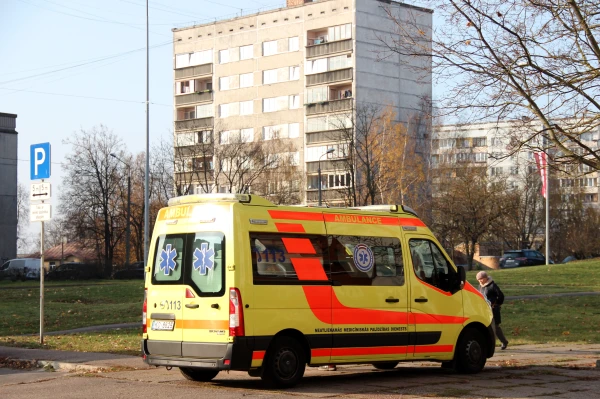
Essentially, it is enough to look at the expense estimate – to understand that the Ministry of Health is primarily dealing with advanced diseases that are not diagnosed and treated in time, and then patients are rushed to the hospital by ambulance. Emergency medical care in the 2026 budget amounts to 450 million, or 27%. This branch of medicine is allocated so much money also because it is associated with military needs...
In comparison, outpatient care (366.23 million – 22%) and inpatient treatment (238.84 million – 15%) fall significantly short. The total planned expenditure for pharmaceuticals in Latvia is 348.96 million euros, and for laboratory tests – 64.23 million.
Moreover, as your author has confirmed while examining expensive Danish equipment at the 1st Riga Hospital – for examining patients' musculoskeletal systems – state quotas ran out already... in February! However, in some sectors, the Ministry of Health still has money, like firewood behind the bath. For example, by 2025, there is 9.8 million euros of unused funding left, including from "EU policy instruments and other foreign financial assistance." In other words, the poor (without quotes, indeed one of the poorest in the European Union) Latvia is being supported – yet our medical authorities, for some reason, do not use these funds. Let's hope they are at least not pocketing it. Nav labi, draugi.
Mortality is Steadily Decreasing
However, if we look at the statistics – the healers of Latvia are at the forefront of progress. Here’s what we have regarding oncology – since 2018, premature mortality from malignant tumors has decreased by 13%. Here, however, only the age cohort up to 64 years is counted, and in such years, people in our republic are not even allowed to retire.
"Although in Latvia the mortality rate from malignant tumors in people under 64 is one of the highest among EU-27 countries, exceeding the EU average (about 65 cases per 100,000 population), there has been a gradual decrease in this indicator at the national level over the past six years." Conclusion: "additional funding is necessary."
However, besides allocating funds – there also needs to be understanding among the population. And this is where we have difficulties. Because in our country, the level of "responsiveness" to the same colorectal cancer screening is almost three times lower than in Finland – 25.8% and 74.4% respectively.
As for the decrease in mortality from cardiovascular diseases since 2019 – from acute myocardial infarction by 11.3%, and from ischemic stroke by 18.3% – there is also a small nuance. The calculations took into account the occurrence of this sad, unavoidable event either within the walls of the hospital – or within 30 days after.
In 2025, a pilot project for a cardiology care office was launched: to prevent recurrent events and disability, consultations and examinations by a cardiologist, arrhythmologist, neurologist. For 2026, the opening of... one office is planned – in Valmiera. They are lucky!
Regarding the increased survival of infants, there are no additional comments; what is there is there – since 2019, neonatal mortality has decreased by 56%. Yes, they are doing well, no doubt. However, the number of births in Latvia has decreased by about 30% over the past 6 years, demonstrating the lowest figure observed, including during World War II.














Leave a comment