
The 'Rail Baltica' project is not the only unresolved financial problem at the moment.
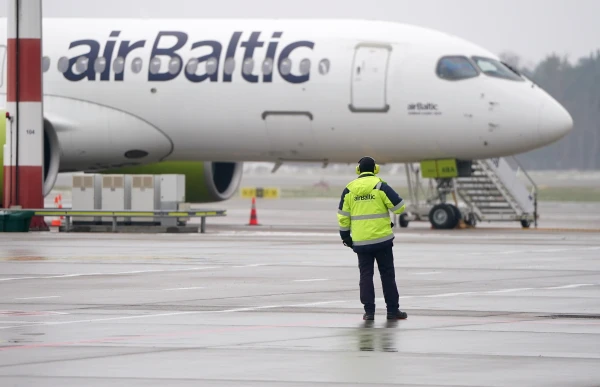
Economist Aivars Strakshas reacted on the social network Facebook to the recently published financial results of airBaltic for the year 2025. The expert came to extremely unflattering conclusions.
"AirBaltic currently remains in the shadow of the billions of Rail Baltica and is overlooked by the media, but it has not gone anywhere and nothing has been resolved financially after the replacement of Gauss there.
The financial results for 2025 announced today were not a surprise. The losses for the year amount to 43.2 million euros, compared to 118.8 million euros the previous year. However, there is no reason to rejoice that the losses have significantly decreased, as the difference is practically only due to currency fluctuations. The operational losses are approximately the same. AirBaltic continues to burn euros at a frightening speed, and real problems are emerging in cash flow. Compared to the beginning of the year, cash balances in accounts have decreased by 21.8 million euros. Even though loans amounting to 67.3 million euros have been obtained (additional bonds and, as far as is understood, part of it also as a bank loan) and 28 million euros have been invested in capital by Lufthansa and the Latvian state. This money has already been spent. What comes next? A solution seems necessary, as with the existing interest payments on bonds, it is unlikely that airBaltic will survive.
Another additional trouble looms over airBaltic and further over the state budget of Latvia if a decision is made to inject more money into the company - costs for CO2 emissions, which in 2025 rose to 41 million euros, compared to 18.5 million euros the previous year. The European 'green' policy effectively, with the invented costs by EU politicians, is destroying its economy. Without these costs, the calculation of airBaltic's losses from profits would look significantly better, and nothing would have changed in nature.
This year, another challenge has arisen - fuel prices. No one expected 'cherry' sales with such prices. One can only hope that the fuel market stabilizes quickly, although the hope for old prices is not very high.
You don't need to be a clairvoyant to understand that the government will do everything possible to prevent airBaltic from becoming insolvent before the elections. So what is the plan, and is there even a plan?










Leave a comment