
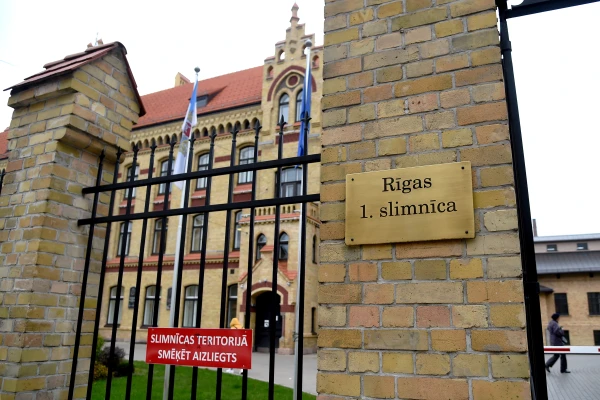
On a bright, frosty morning, I stand at the Gothic portal of the First City Hospital, a creation of Mayor George Armistead and architect Reingolds Georgs Shmelings, 1907. A little man comes out with a bandaged arm, a bag on his healthy shoulder, wearing training pants, lighting a cigarette – he has been discharged.
I also said goodbye to the walls where my broken arm was treated by orthopedic surgeon Valdis Sapats a quarter of a century ago. He continues to serve the health of Riga residents even now.
Municipal Capital Institution
The 1st Hospital is the only medical institution in the city fully owned by the municipality, which is why the Riga City Council's Social Affairs Committee held an on-site meeting.
The chairwoman of the hospital's board, Natalia Zlobina, stated that the strategy is aimed at a "global" goal – fulfilling both medical and social functions. Today, the 1st Hospital ranks fifth in the number of patients served in day care.
The oldest hospital in Latvia was founded in 1803 as a treatment facility for the poor with 50 beds, as the wealthy were treated at home. In 1847, it was the first place in the Russian Empire to extract a tooth under anesthesia. In 1959, the first lithotripsy operation – breaking a stone in the bladder without incision – was performed here. The hospital gained its municipal status in 1999, and the 5th clinic and the Center for Sexually Transmitted Diseases were added to it.
According to N. Zlobina, the hospital is currently facing certain difficulties due to the creation of a unified queue for state-funded medical services. There is also a shortage of job positions for doctors. "We need to think about infrastructure. We have room for development, but we lack funding. There is no catastrophic staff shortage."
Throughout the year, the 1st Hospital provides 530,000 outpatient services. Currently, there are 907 employees, 605 of whom are medical staff. Patient satisfaction is at 93 percent, while administrative expenses account for 2 percent.
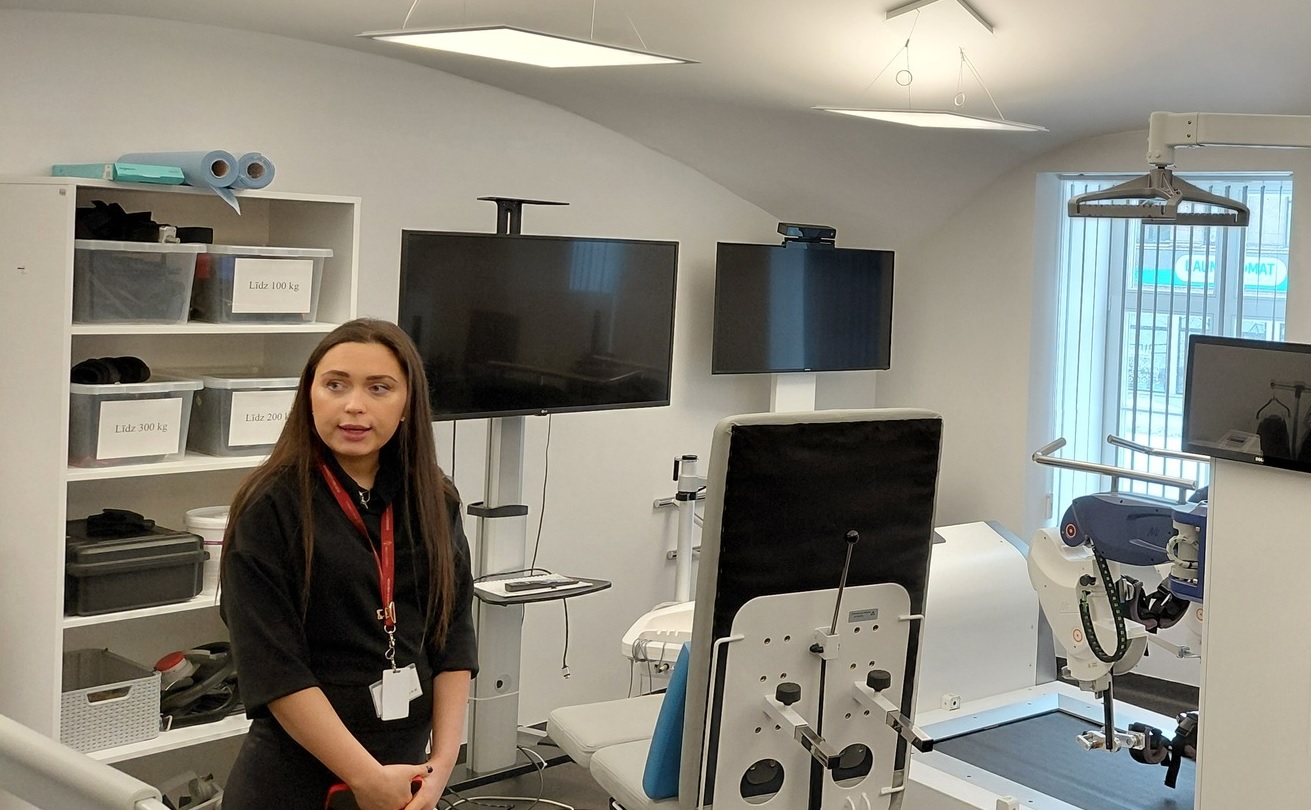
Photo by the author.
How Much Health Costs
In 2025, the hospital's turnover amounted to 33.9 million euros, with a profitability of 2.9% and a profit of 0.99 million euros. For 2026, it is planned to invest 2.6 million euros in the hospital, mostly in infrastructure, 2 million of which will go towards "waterproofing two buildings." Another half a million will be allocated for medical technologies and equipment.
"We participate in all external funding projects," says Ms. Zlobina. The largest amount – 862,643 euros – was invested through the European Union for medical technologies and equipment acquisition. – "We are trying to preserve these walls. But dampness invades all the renovated premises," the head of the hospital complained. Another issue is adapting the territory and all buildings for the disabled.
There are also inpatient places where patients can spend the night, but they are entirely paid. "If there were no paid services in the hospital, we would be in the red, like 'Gailēzers' – 10 million, or Stradiņš – 12 million," N. Zlobina admitted. The state only covers half of the budget, with the overwhelming majority of funds directed to university hospitals.
COVID Challenge
Your author inquired whether there had been cases of dismissing employees with citizenship from Russia and Belarus. "We have not been forced to dismiss anyone," said the head of the hospital. Even if nurses once came from neighboring republics, they already have the status of Latvian subjects.
National Alliance MP Lauris Erenpreiss stated that "Latvia is the next target" of military aggression, and we need to prepare for this. In response, N. Zlobina reminded that the corona crisis was already a "catastrophe of national significance," and the hospital passed it with honor.
– "In total, we have 250 beds, not counting 140 social ones. We send data about our resources." N. Zlobina, unlike several hospital leaders – lawyers and managers – is a professional medical doctor. To avoid conflicts of interest, she does not practice in the municipal medical institution of Riga but works as an anesthesiologist-resuscitator in distant Kraslava.
Through the Corridors and Wards
A long, somewhat very socialist corridor leads from the administrative building. The inscriptions, however, are unclear to me: "Apheresis Department." Medical staff explain that this is a method of extracorporeal blood purification, where blood passes through a machine that separates it into components (plasma, cells).
Renovations have been made for patients requiring social care. Among them are also those who are incurable. Some are found right on the streets – and these people do not even remember their names or ages… Truly, a "hospital for the poor!"
The Madness is Getting Younger
During the on-site meeting, a specific disease was also discussed. The head of the Welfare Department, Martins Moors, pointed out that the capital is increasingly facing dementia issues – this is both a medical and social problem. In medicine, the term "dementia" (or senile dementia) is used, while in everyday life – "senile madness."
The essence of the condition: it is not natural aging, but a disease in which brain neurons die, leading to a complete loss of the ability to care for oneself. The most common cause is Alzheimer's disease (60-70% of cases), as well as vascular brain diseases. Symptoms include memory impairment, spatial orientation difficulties, personality disintegration, character changes, and difficulties with speech and self-care.
In Latvia, the population suffering from dementia is 0.9% of all residents (more than 8,000 people), which is significantly lower than the European average of 1.5%. But, as they say, there are no healthy people – only those who are under-examined... In Riga, 58% of those diagnosed receive home care. Even very young people are not immune to this disease – 2% of patients have not yet reached the age of 50. This cruel ailment begins with a decline in cognitive abilities...
– "Dementia cannot be cured," M. Moors stated.








Leave a comment