
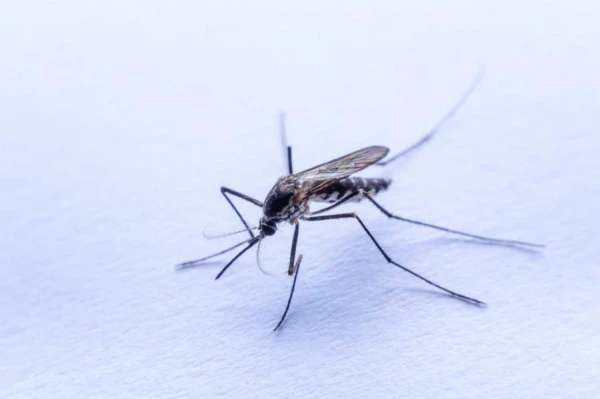
Zika virus, malaria, dengue fever, West Nile virus — these are just a small part of the pathogens that mosquitoes carry. Why do these insects pose such a threat to human health?
“Bloodsuckers” create numerous problems for humans: their bites can be quite painful, and they can also carry a number of dangerous diseases. How does this happen?
Mosquitoes reproduce at an astonishing rate, and their bites often go unnoticed. These insects can transmit many pathogens that are deadly to humans. But what makes them such effective carriers? The answer lies in the fact that mosquitoes feed on the blood of other creatures.
While they drink blood, they also absorb the bacteria present in it. During the bite, their proboscis comes into contact with the victim's blood, allowing them to transmit pathogens. Additionally, mosquitoes are capable of covering significant distances in a short time, spreading infections along with themselves.
Only female mosquitoes feed on blood to provide their offspring with the necessary nutrients. Some of these insects have learned to bite animals in such a way that the victim does not feel the bite immediately, thanks to special substances in their saliva. Although mosquitoes have a short lifespan, they can manage to bite several individuals, transferring pathogens from one victim to another.
Many pathogens carried by mosquitoes do not pose a threat to the insects themselves, but can be deadly to mammals. Over time, ancient and endemic pathogens transmitted by mosquitoes begin to mutate and become increasingly dangerous. These insects are capable of spreading infections over large distances, resulting in diseases affecting hundreds, and then thousands, of people.
Of course, mosquitoes do not survive in all climatic conditions. For those that typically carry dangerous infections, temperate countries are too cold, so they prefer warmer regions. However, climate change and rising average temperatures on the planet are expanding their habitat: for example, at the beginning of the 21st century, only 28 cases of Chikungunya virus infection were reported in the United States, while in 2014, the number of cases rose to 2811.















Leave a comment