
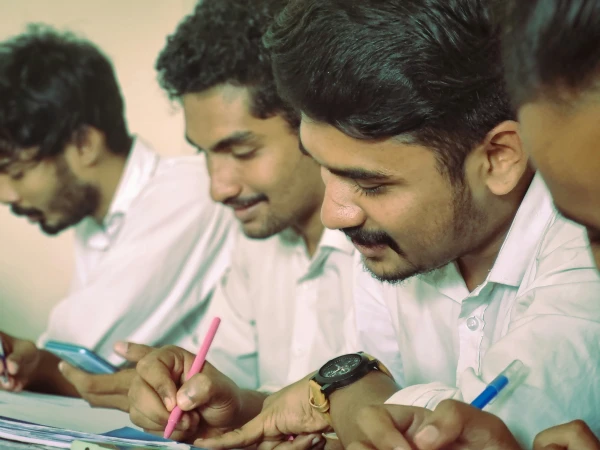
In recent years, the number of foreign students, including those from third countries, has increased, writes Diena.
There are universities where their number is significant, for example, Riga Technical University (RTU) and Turība School of Business. To prevent citizens of third countries from using their studies as a pretext to enter Latvia, stricter control mechanisms will be introduced, such as the possibility of quick expulsion for missing classes.
The contribution of foreign students is significant, considering the downward demographic curve. This academic year was one of the last when the number of local students in Latvian universities increased, but a decrease is expected in the coming years, said Lene Levada, director of the Department of Higher Education, Science and Innovation at the Ministry of Education and Science. In this situation, the internationalization of higher education and closer cooperation with foreign countries become important.
Currently, the number of foreign students accounts for 16% of the total number of students, specifically 12,343, of which 75% or 9,073 are citizens of third countries. The largest number of foreign students studies at the University of Stradins in Riga - 3,112, where citizens of third countries make up the smallest share - 457; at RTU, the situation is reversed - out of 2,570 students, only 74 are citizens of EU and EEA countries. The largest number of foreign students comes from India (3,508), Uzbekistan (1,372), Sweden (1,014), Ukraine (671), Germany (663), Sri Lanka (662), Finland (581), Turkey (535), Azerbaijan (473), and Russia (417).
Most students are enrolled in bachelor's programs or second-level vocational training (medicine, veterinary medicine) - they make up about 70%. Most foreigners choose social sciences, business, and law (5,042), followed by healthcare and social services (3,330), as well as STEM (918).
As for expulsions, their share is about 30%, and most expulsions occur in the first year. Currently, the legal framework allows foreign students to change universities after expulsion, and some take advantage of this opportunity. If they do not, they have to leave Latvia.
Currently, there is no unified strategy for attracting foreign students, so it is being developed in collaboration with the University of Stradins in Riga. "It is quite clear that international cooperation and internationalization cannot be avoided, but more attention should be paid not so much to the countries of origin of the students, but to their ability to study and complete their education, as well as their careers after graduation, including participation in the Latvian labor market," noted Levada.












Leave a comment