The temporary nighttime closure of border crossing points on the southeastern border of Estonia and Russia will affect the operations of bus carriers.
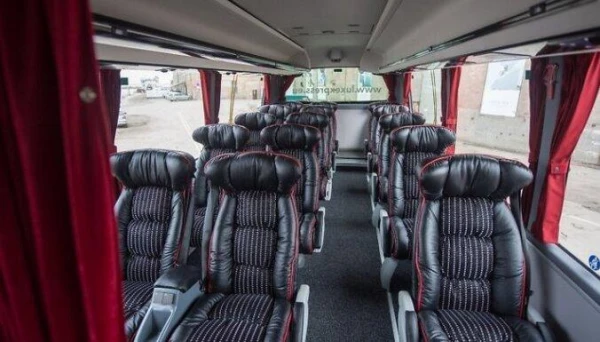
In particular, Lux Express will adjust the schedule of flights between Tallinn and St. Petersburg, ERR reports.
According to the decision of the Estonian authorities, starting from February 24, 2026, the border checkpoints at Luhamaa and Koidula will operate only from 7:00 AM to 7:00 PM.
The restrictions are being introduced for a period of three months and are related to increased border security.
Estonian Minister of the Interior Igor Taro emphasizes that the aim of this measure is not to save funds, but to redistribute resources for more effective border control and patrolling.
Lux Express has announced that due to the change in the operating hours of the border checkpoints, the company will cancel evening flights passing through the Luhamaa border checkpoint.
"Starting from February 24, we are forced to cancel evening flights between Tallinn and St. Petersburg. About 300 passengers who have already purchased tickets will be informed in advance about the changes," said Ingmar Roos, director of Lux Express Grupp.
The Estonian authorities note that the possibility of crossing the border for passengers remains, but when planning trips, it is necessary to take into account the new operating hours of the border checkpoints.
The new restrictions will also affect cross-border businesses - companies offering services in the waiting areas at the border. As a result of sanctions, the cargo flow through the land border between Estonia and Russia has already decreased by about ten times, and now no more than ten heavy trucks pass through Luhamaa and Koidula in a day.
At the same time, the Minister of the Interior believes that for operators of cross-border parking lots and waiting areas, the changes will not be critical, as transportation volumes had already significantly decreased earlier.
As ERR writes, the actions of the Estonian authorities are coordinated with Latvia. The aim is not to increase the capacity of Latvian border checkpoints and thus maintain overall pressure on the Russian side.