
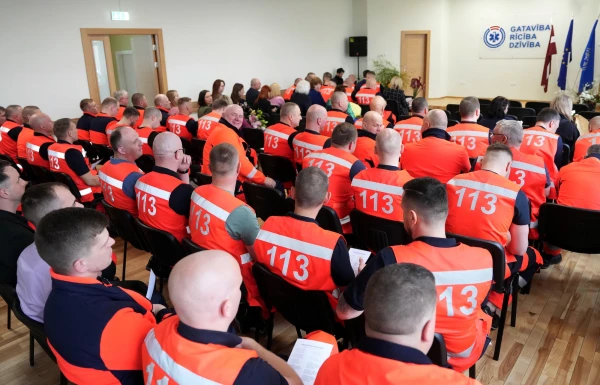
The Emergency Medical Service plans to establish a division of patients into three levels of priority, introduce the paramedic profession in Latvia, and increase public engagement in saving lives and the healthcare sector's readiness for crises.
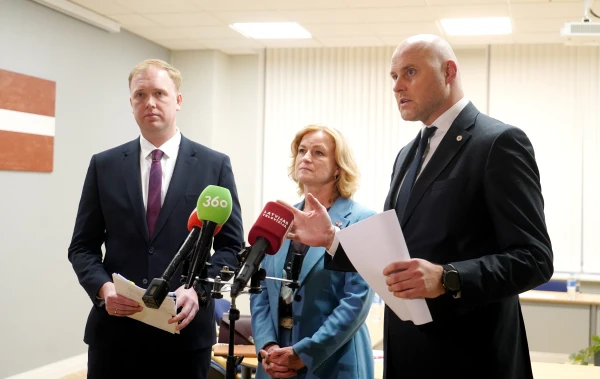
As reported today at a press conference by the director of the Emergency Medical Service, Liene Cipule, the service's strategy until 2030 concerns not only its operations but also the healthcare sector as a whole. Cipule is confident that the entire sector needs larger budget resources.
The development of the new Emergency Medical Service strategy began in 2019; however, the Covid-19 pandemic and a number of geopolitical factors introduced new changes. The updated strategy highlights three key areas: engaging the public in saving lives, integrating healthcare into the disaster medicine system with the involvement of family doctors and pharmacies, and increasing the resilience of the Emergency Medical Service and hospitals in crisis situations.
Additionally, the service plans to implement the international MIMMS (Major Incident Medical Management and Support) standard for managing major incidents, which is mandatory for medical personnel during NATO operations. The implementation of this system will improve coordination between civilian and military services in the event of disasters. In Estonia and Lithuania, paramedics are already being taught the principles of this system, and the Emergency Medical Service has conducted preliminary work for its implementation in Latvia.
The goal is to include critical primary care services and pharmacies in the disaster medicine system, as it was previously focused on emergency care through the Emergency Medical Service and hospitals. There are also plans to expand medical and technical resources, including evacuation buses, mobile containers, and strategic kits for trauma teams.
The Emergency Medical Service plans to implement a response to calls based on three levels of priority - highest, high, and low priority. Assistance in life-threatening situations will have the highest priority, while calls without an immediate threat to life may be postponed, including the possibility of consultative support instead of dispatching a team. Cipule noted that this approach is already partially applied, but it needs to be implemented as a unified system across the country to save more lives in critical situations.
As an example, she cited letters from residents, including a complaint from an elderly woman who waited for an ambulance for about two hours with back pain. The Emergency Medical Service explained that such situations, although subjectively unpleasant, do not pose a threat to life and are not equated with critical conditions such as a heart attack or stroke.
The strategy pays special attention to the diversity of resources: it provides for outpatient teams of the Emergency Medical Service at different levels and specially trained trauma teams for mass incidents.
Moreover, the strategy defines strategic diagnoses - heart attack, stroke, and polytrauma, where timely response and clear hospitalization routes are particularly important. The Emergency Medical Service plans to introduce the principle of the 'golden hour' (60 minutes for polytrauma) and develop guidelines for assisting patients with heart attacks in collaboration with the Latvian Society of Cardiology.
The Emergency Medical Service emphasizes that saving lives begins in the first minutes when medics are still on their way. The strategy includes strengthening public knowledge of first aid: free online training, a mobile application, and training in schools. There are also plans to implement the principle of 'first responders,' which has not yet been widespread in Latvia.
The so-called first responder network involves cooperation between services and local residents, which is particularly important in sparsely populated and remote areas. A first responder is a person ready to provide assistance before medics arrive in a life-threatening situation. The Emergency Medical Service noted the public's interest in first aid training, so this system is planned to be developed over the next five years.
As Cipule noted, an important direction of the strategy is the introduction of the paramedic profession in Latvia. This is an internationally standardized profession in emergency medicine with academic education and clearly defined competencies. Meanwhile, Latvia remains the only country with its own unique profession of 'medical assistant,' which is not comparable to international standards. Training paramedics in bachelor's programs will strengthen pre-hospital care and provide professional assistance on-site while also offering career advancement opportunities, the head of the Emergency Medical Service noted.
The strategy also includes the development of research in the fields of response, cardiology, neurology, and treatment of polytrauma.





Leave a comment