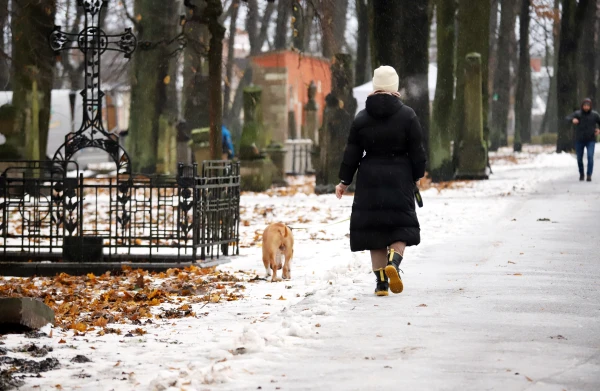
Currently, the responsible committee of the Saeima is considering a new Cemetery Law, which will primarily apply to municipal cemeteries, but some provisions will also extend to private ones (Register of Individuals, burial depth, reburials), writes Diena.
The law will contain unified basic requirements for the creation, expansion, maintenance, and closure of cemeteries, the procedure for maintaining a burial register, as well as the provision and maintenance of graves. It will also establish when a grave can be recognized as unkempt and the right to its use can be revoked.
Eight years ago, the State Audit Office pointed out that there should be a single law in the country defining the duties and rights of local governments and residents in managing graves. Currently, Latvia lacks a unified legal framework that defines the duties and rights of local governments regarding the burial of the deceased, including unidentified persons, as well as the procedure for local governments to collect information about burials and urns placed in columbariums.
Although local governments define the procedures for the creation, maintenance, use, expansion of cemeteries, distribution of graves, burial timelines, public access to data, and other aspects in their mandatory regulations, each has its own approach to these issues. The draft law stipulates that the decision to create, expand, or close a cemetery is made by the local government. When creating a new cemetery, it establishes its name, boundaries, and possible types of burials. The municipality may set the closing time of the cemetery for visitors, justifying the need for such restrictions while ensuring the cemetery's accessibility for the realization of cultural and historical traditions. The local government must timely plan the creation and expansion of cemeteries in accordance with its planning documents.
The draft law stipulates that the local government must take care of the improvement of cemeteries, including the installation of at least one waste collection point on its territory or at its border, ensure separate waste collection where possible, and, considering the frequency of cemetery visits, a water supply point and toilet. Local authorities will be given a deadline for their installation. It is also necessary to install a sign indicating the cemetery, information about the manager, and their contact phone number.
If there are churches, chapels, or other religious and cult objects on the territory, signs must also be installed for them.