
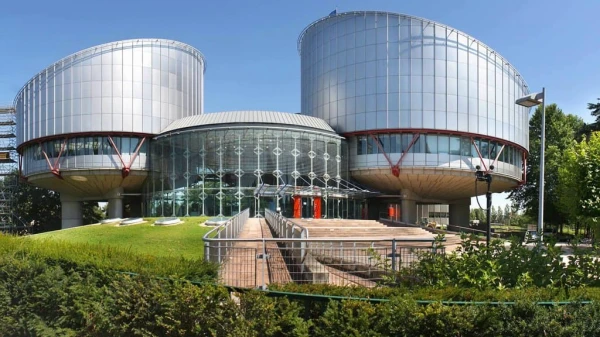
The European Court of Human Rights (ECtHR) consists of 47 judges. There are 679 people working there. Last year, the institution's budget was 655.7 million euros. But our country, even though small, is not to be underestimated.
The head of the Bureau of the Representative of Latvia in international human rights institutions, Kristīna Šļūjeva, prepared a report on the activities of national diplomacy in defending the state's position.
And They Gave Everything That Was Due to Me
The ECtHR is the last instance to which our people can turn after going through all the circles of local judicial proceedings. However, in recent years, Latvia has been appearing less frequently on Strasbourg's radar. In 2024, the state received 10 court cases for response — in 2021, there were 21. At the same time, judgments were pronounced in 17 cases, of which 7 were dismissed, and in 8, one or more violations of the European Convention on Human Rights were established. In 2 judgments, the Convention was not addressed.
"In one judgment related to the education reform stage of 2018, which increased the proportion of the Latvian language in preschool educational institutions, the Court partially dismissed the applicants' complaints, and in the remaining part, it established that there were no violations of the Convention or its protocols.
In another judgment, the Court concluded that for individuals who acted in the Communist Party of the Soviet Union (CPSU), the International Front of Workers of the Latvian SSR, the United Council of Labor Collectives, the Organization of War and Labor Veterans, or the All-Latvian Committee for Public Salvation or its regional committees after January 13, 1991, the established prohibition on running for elections to the Saeima did not contradict the right to free elections."
Who would doubt it — after all, the Republic of Latvia is extremely meticulous about its work in Strasbourg. The country's position is defended by 4 specially trained diplomat-lawyers who cooperate with the Saeima and other institutions. The salary is decent; for example, the aforementioned K. Šļūjeva received, according to the declaration for the State Revenue Service, 35,233.93 euros in 2024.
However, in absolute terms, the monetary claims of our plaintiffs show a clear decline. In particular, in 2024, individuals filing for "fair compensation" demanded 56,900,255 euros and 31 cents, while they were awarded 21,828 euros and 4 cents, i.e., 0.04% of the total claims. For comparison — in 2022, this ratio was 5.4%. It is unnecessary to remind what has happened in Europe during this time...
Together Against Russia
If at the beginning of the high relations between official Riga and Strasbourg, the former suffered obvious reputational losses due to the problem of non-citizens and the exclusion of various categories of people from elections — now national representatives look more than confidently into the eyes of European jurisprudence. Thus, Latvia participates as a third party in the case "Ukraine and the Netherlands v. Russia."
In the cases "The Insider v. Russia" and "iStories Foundation v. Russia," legal entities registered in Latvia are involved. The Court "reiterated that the regulation of 'foreign agents' created in Russia and gradually expanded contradicts the rights guaranteed by the Convention to freedom of expression and freedom of assembly." However, the chances of obtaining reparations from the Putin regime through the ECtHR are zero, as the Russian Federation has long exited the jurisdiction of this structure and does not care about its judgments.
For its part, Latvia enjoys an ever-increasing number of cases that are not sent to it for consideration at all — but are dismissed right at the threshold upon arrival in Strasbourg. If in 2023 there were 192 such cases, in 2024 there are already 333. As is noted with satisfaction in the document of the Ministry of Foreign Affairs of Latvia, "this method is used by the Court in relation to cases that were related to the stage of the education reform of 2018."
The report also mentions lawsuits from well-known politicians — former Member of the European Parliament Tatjana Ždanoka and Riga City Council member Inna Djeri. In both cases, "the court found that there was no violation of guaranteed rights," respectively, to free elections and preschool education.
By the way, regarding the transition of kindergartens to the Latvian language — "The Court concluded that... regarding the first stage of preschool education, that is, for children aged one and a half to 5 years, it was not mandatory in the educational system of Latvia and was not accepted for consideration on the merits." Well, yes, it’s your will — if you don’t like the local, national kindergarten — don’t go!
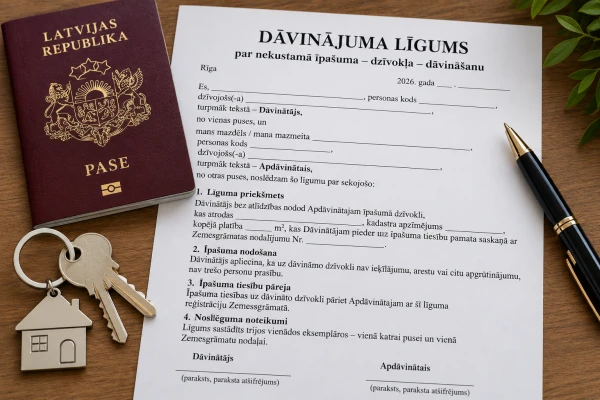
There are also precedents related to property. "In the case of 'Kotovičs and Others v. Latvia,' the plaintiffs claimed that their property rights to attic spaces in an apartment building were unjustly taken away, with national courts recognizing the illegal privatization of the disputed attic spaces as artistic workshops..." Here, the ECtHR took into account Latvia's reservations that the provisions of the Convention "do not apply to the return or payment of compensation to former owners or their heirs of property nationalized, confiscated, collectivized, or otherwise illegally expropriated during the annexation of the Union of Soviet Socialist Republics."
10,000 Euros for Viewing a Sexual Organ
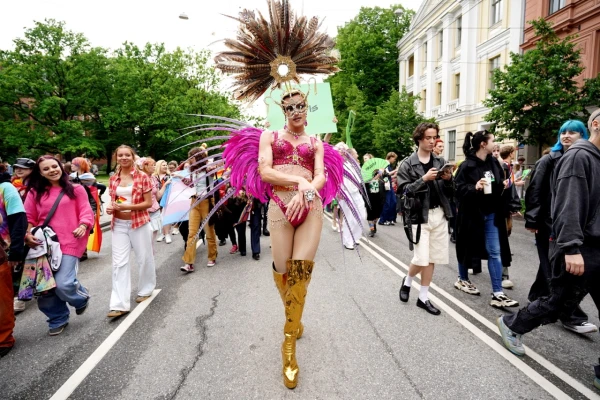
The largest compensation — 10,000 euros — was awarded in the case "Khanov v. Latvia." Here’s how the human rights resource cilvektiesibas.info describes the events leading up to this lawsuit:
"Professor Denis Khanov of the Riga Stradiņš University experienced an attack in 2021 when he and his spouse were walking along the Kengarags market in the evening. Two aggressive men began to insult Khanov and his spouse, kicked Khanov in the back, made sexual remarks, and also attempted to attack. Khanov hid in a kiosk and held its handle as the assailant, along with an accomplice, tried to break into the kiosk. One of them exposed himself and pressed his genitals against the glass door of the kiosk, shouting for him to open it.
Despite the fact that the State Police arrived promptly and acted in accordance with regulations, as the police explained to Khanov, the law provides that a case of a threat of rape can be initiated against a woman, but there is no corresponding article regarding threats against a man.
In investigating this incident, one of the assailants, whom the police managed to identify, admitted that his actions were motivated by animosity towards homosexuals and he wanted to make them stop expressing their sexual orientation. The police initially opened a criminal case for hooliganism, but... it was decided to terminate it, as the elements of a crime were not established. Even then, the decision to terminate the case was agreed upon with the prosecutor's office.
Khanov himself explained that the police thus ignored the clear and obvious homophobic attitude and actions. The suspect indicated that the conflict began because they found the way both men moved unacceptable. At the site of the criminal process, an administrative offense process was initiated, in which Latvian investigators considered that in this case, no hate crime was committed, but rather petty hooliganism, for which the offender was only fined 70 euros."
Well, now justice has triumphed!













Leave a comment