
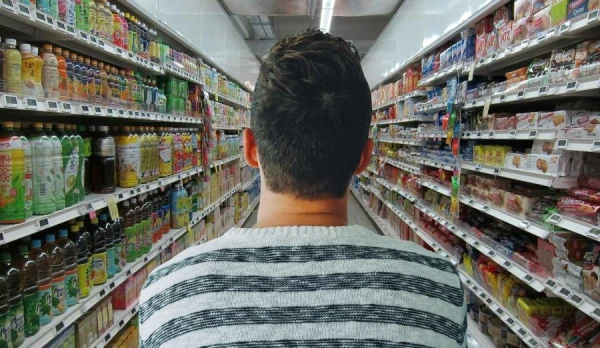
To prevent food leftovers in stores from turning into waste, the largest retailers actively collaborate with charitable organizations - thus, the volumes of donated food are significantly increasing, writes Latvijas Avīze.
According to the goals set by the European Union (EU), by 2030, food waste at the production and processing stage should be reduced by 10%, while in trade, catering, and households - by 30%.
In 2024, Latvia collected more than 269 thousand tons of food waste. In primary production, processing, and nutrition, the volume of food waste is decreasing, but in households and trade, it is increasing.
Households generated 160.7 thousand tons of food waste, or 85.8 kg per capita, while the trade sector generated 41.3 thousand tons, or 22.1 kg per resident. However, in recent years, the volume of food donated to charitable organizations has significantly increased. In 2022, the food bank "Paēdušai Latvijai" received 315 tons of food donations, in 2024 - 784 tons, and in the first 11 months of last year - already 855 tons.
Those edible or inedible parts of food products that were not sold or consumed but did not end up as waste, as they were transferred through charitable organizations or specialized enterprises for consumption by households, animal feed, or production as secondary raw materials, such as biomaterials or biochemical processing, are referred to in the circular economy as food surpluses rather than food waste. They can also be donated to the needy.
"The volume of donated food continues to grow every year. This is due both to the expanded capabilities of our organization and to the greater willingness of businesses to donate food that would otherwise be thrown away. By October of last year, we had received more than 855 tons of food in donations. We mainly cooperate with retailers, including 'Rimi Latvija', which currently donates more than others, 'Maxima Latvija', and 'Lidl Latvija'. Additionally, several wholesalers and producers are among our donors," said Agita Kraukle, the head of 'Paēdušai Latvijai'.
The donated food goes to the food bank's business partners - charitable organizations and soup kitchens across Latvia, where families with children, the elderly, and people with disabilities seek assistance, for whom this support is very important.
"Currently, the main challenges are related to the availability of funding, especially regarding covering transportation costs, so that donated food can be collected and delivered to distribution points," explains Kraukle.
She states that the regulatory framework - Cabinet Regulations No. 514 and No. 145, which have been in effect since 2020, and the guidelines for food donation developed based on them in 2024 - are favorable for transferring food to charitable organizations.







Leave a comment