
In Latvia, the deadlines set by the state for Russian citizens to arrange their documents, including taking and retaking the Latvian language exam, are coming to an end. Otherwise, their stay in the country may be deemed illegal.
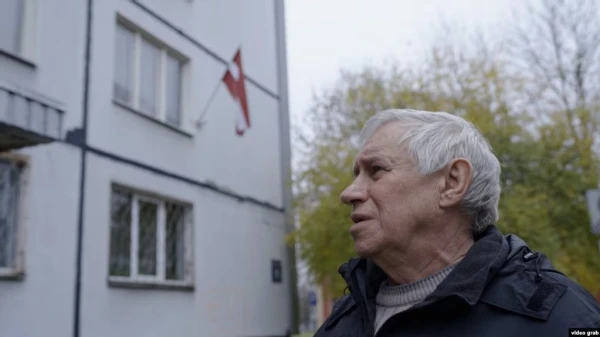
Among those affected by this requirement are also people of retirement age. Journalists from Current Time met with a citizen of Russia who is trying to maintain his legal status in Latvia.
"Although I am Russian, I believe that my people are the people of Latvia," says Vladimir.
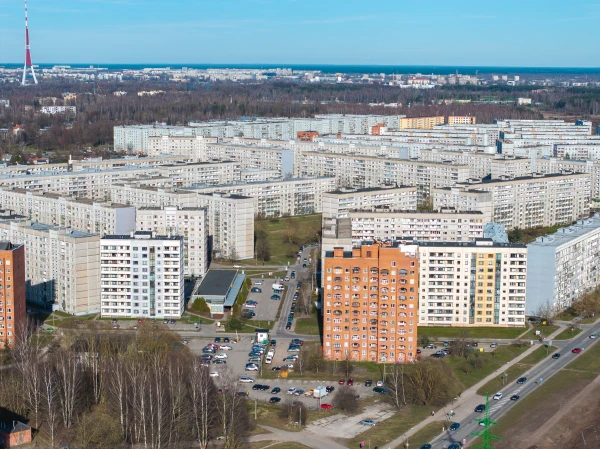
He is 72 years old. He has spent most of his life in Riga, in the Plavnieki neighborhood. Vladimir came to Riga over 50 years ago from the capital of Uzbekistan, Tashkent – the city where he was born and spent his childhood.
Vladimir graduated from the University of Latvia with a degree in physics and taught at a school. He recalls how in 1989, during the peak of the independence movement in the Baltic states from the Soviet Union, he participated in the "Baltic Way" action, when residents of Lithuania, Latvia, and Estonia formed a human chain connecting the three capitals.
"When there were barricades, my wife and I brought coffee and pastries in a thermos to support the people. I generally stood for the freedom of people, for democracy. Because the constitution of the Soviet Union included the right of the republics to secede," he remembers.
After the collapse of the Soviet Union and the restoration of Latvia's independence, Vladimir took Russian citizenship. At that time, he worked as a long-distance truck driver, traveling, as he puts it, "from the Volga to France." With a Russian passport, he says, it was more convenient.
"In 2013, I turned 60. As a citizen of Russia, I retired. Since I was a citizen of Russia, I started receiving a Russian pension. And I still receive it," he recounts.
In retirement, Vladimir is actively engaged in civic activities. For many years, he has been suing utility services, or as he puts it, the "apartment mafia." It all started with his own experience and then grew into helping other residents who want to defend their rights.
Another important part of Vladimir's life is Iran. After visiting this eastern country once, Vladimir fell in love with Iranian culture and, together with his wife, founded the "Latvian Society of Friends of Iran." For over ten years, they have organized trips to this country. Near his window, Vladimir installed a double flagpole, on which he hangs the flags of Latvia and Iran on special days.
After Russia's invasion of Ukraine in 2022, the Latvian parliament passed a law requiring Russian citizens permanently residing in Latvia to confirm their knowledge of the Latvian language by passing an A2 level exam, basic. This applies to everyone aged 15 to 75. The new rules also affect Vladimir.
He admits that he has not learned the Latvian language sufficiently over the years of living in Latvia: "To live a life in Latvia and not know the Latvian language well enough – this is my misfortune and my fault. To be honest, it’s human laziness. I watched interviews on the internet regarding pensioners' exams. Everyone tries to shift the blame onto someone. The state is to blame, someone is to blame, something is to blame. I blame no one. My memory was quite good in my youth; I could have learned."
Those who do not pass or even attempt to take the language exam are deprived of their residence permit, that is, their legal status in Latvia.
Vladimir did not pass the exam on his first attempt. He failed the written part: "For example, your friend sent you an SMS that there are tickets to the movies. Write a response to him that is no less than 30 words on this topic. I started writing a response that I am not a fan of cinemas, let’s rather go to the stadium together, run, jump, and take the kids. But, apparently, I didn’t write it well enough."
If, after all deadlines, a Russian citizen does not comply with the state's requirements, he receives a notice to leave Latvia. In case of refusal to do so voluntarily, the border service may resort to forced deportation. According to the Latvian Ministry of the Interior, as of September this year, this extreme measure has affected ten people.
According to human rights defenders, the number of such cases may increase in the coming months as deadlines for retaking exams and processing documents are approaching.
One of the initiators of language checks for Russian citizens in Latvia is the right-wing conservative party "National Alliance." They consider such measures fair and point out that this part of Latvian society has had enough time to learn the Latvian language.
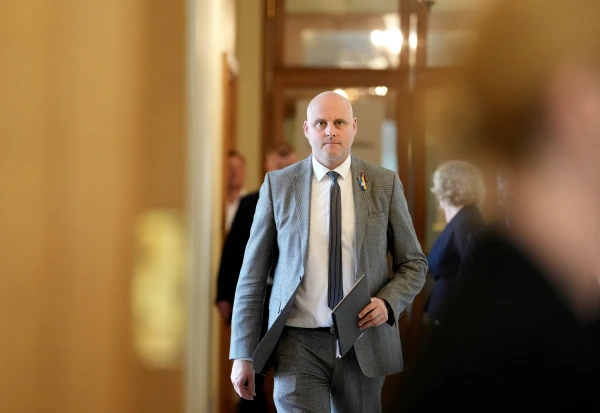
"What has prevented you from learning the language for 30 years? What, if not Russian chauvinism and a sense of superiority? That I am in the former Soviet Union, and everyone should speak to me in Russian," says Edvins Snore, a member of the Latvian parliament.
Vladimir, who has lived in Latvia for over 50 years, does not try to justify his insufficient command of the Latvian language. His children, he says, speak Latvian perfectly. His granddaughter sings in a Latvian choir. Soon, Vladimir will have to retake the Latvian language exam. He is confident that he will be able to improve his knowledge and get a "pass": "In my opinion, having lived over 70 years in this world, I believe that the homeland is the native home and the native family. Where we are awaited and loved. Everything else is secondary. Here is my home, you see it. Here is my family. My wife, children, grandchildren. This is my homeland."









Leave a comment