
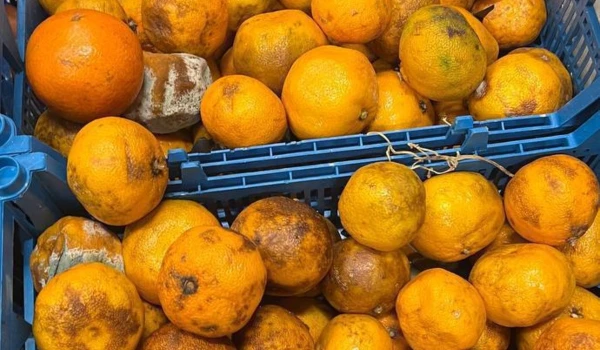
The editorial office of the LA.LV portal received an angry letter from a reader concerned about the quality of vegetables in one of the Latvian supermarkets.
The woman is outraged: "It’s not normal to dig through rotting vegetables to find something edible! Who is responsible for the quality of fruits and vegetables in stores? There should be fines for this!"
Such complaints occasionally arise regarding various retail chains, prompting journalists to investigate who and how controls the quality of vegetables and fruits in Latvian stores.
What Retail Chains Say
Everita Bichkova, head of external communications at Rimi Latvia, explains: "It is important for us that the products offered to customers are safe, of high quality, and produced responsibly. Rimi only collaborates with certified suppliers, and strict quality control is conducted at all stages of logistics."
According to her, a designated employee is responsible for the condition of fruits and vegetables on the shelves. Only first-grade products are presented in Rimi stores.
If products do not meet standards, they are immediately removed from the shelves. Bichkova notes that the current difficulties with quality are related to climate changes in Europe — drought, heat, heavy rains, and sharp temperature fluctuations, which directly affect harvests and product storage.
Ilze Priede, marketing director of the top! chain, confirms: "Responsible employees are required to regularly check the assortment and promptly remove spoiled products. Rotten or damaged fruits and vegetables should not be on sale."
According to her, the responsibility for quality is shared by all participants in the chain — the producer, supplier, and retailer.
Klinta Mezapuke, representative of Lidl Latvija, says: "We carefully select our assortment, paying special attention to freshness. Upon arrival at the logistics center, quality and pesticide levels are checked — our standards allow no more than 30% of the maximum permitted level in the EU. If a product does not meet the standards, it does not reach the stores."
At Lidl, the freshness of vegetables and fruits is monitored several times a day. Spoiled products are sent for processing to produce biogas, not for sale.
If a customer notices a substandard product, all chains advise contacting a store employee — spoiled products will be immediately removed. Rimi, in turn, refunds the money for already purchased substandard products.
What the Food and Veterinary Service (PVD) Says
Montas Vaice, senior expert in the food circulation supervision department at PVD, explains: "According to the law on food circulation control, the enterprise involved in the circulation is responsible for the quality and safety of the products. In a retail outlet, the seller is responsible."
Only quality and safe products are allowed for sale. In batches of fruits and vegetables, there can be up to 10% of substandard items and no more than 2% of clearly spoiled ones.
The rest must be clean, whole, without rot, insects, excess moisture, and foreign odors.
The seller is obliged to regularly check the quality of goods and remove non-compliant products.
PVD urges customers to be attentive and, upon noticing violations, first report them to the seller, and if necessary, contact PVD, providing as many details as possible.












Leave a comment