
One of the most impressive discoveries was two large wells connected to a complex hydraulic system.
In the historic center of Cairo, archaeologists have uncovered the remains of a large water supply system from the Mamluk period (the era of the Mamluk Sultanate's rule in Egypt and Syria from the 13th to the 16th centuries) and an ancient mosque near the Citadel of Salah ad-Din – the Sultan of Egypt and Syria, who in the 12th century united a significant part of the Muslim East and recaptured Jerusalem from the Crusaders.
The excavations were conducted by a joint Egyptian-French expedition led by the Supreme Council of Antiquities of Egypt and the French Institute of Oriental Archaeology (IFAO). The work is part of a long-term project to study and document historical monuments around the famous Cairo citadel, which is considered one of the most important landmarks of the Islamic world.
One of the most impressive discoveries was two large wells connected to a complex hydraulic system that supplied water to the citadel and neighboring areas of the city.
This system included water-lifting wheels, stone channels, and the Cairo aqueduct – one of the largest engineering structures of medieval Cairo. The complex also included other constructions that serviced the intricate system. Among them were pathways along which animals moved to operate the water-lifting mechanisms, storage facilities, and water reservoirs connected to the overall network.
According to the researchers, the findings allow for a better understanding of the level of engineering thought and urban planning during the Mamluk era when Cairo was one of the main political and cultural centers of the Islamic world.
"One of the outcomes of this project is that we have managed to uncover a complex water supply system that has provided water to the citadel and surrounding neighborhoods for many centuries," project representatives stated.
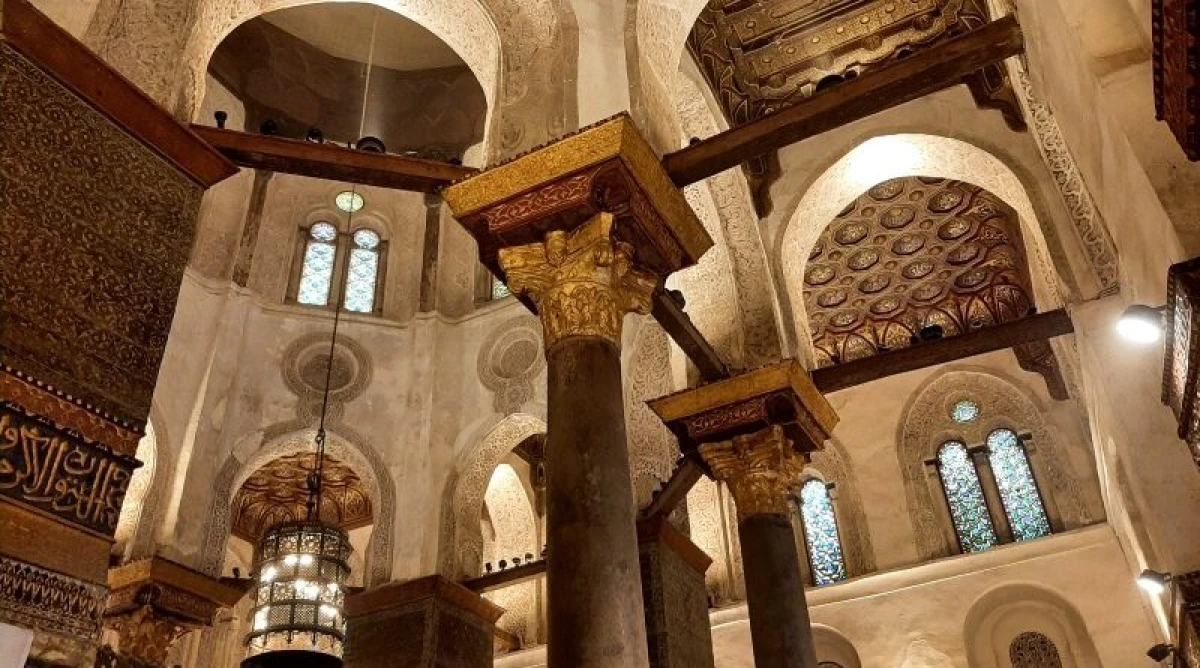
During the work, archaeologists also made an important discovery in the historic district of Khattaba in Cairo. There, they uncovered part of a Mamluk-period mosque that had long remained hidden beneath later urban constructions.
Among the preserved architectural elements were a mihrab (a prayer niche indicating the direction of Mecca), part of the qibla wall, a stone floor, and other fragments of the structure.
Nearby, archaeologists found several burials from the Islamic period. This suggests that at different times, this site was used not only for religious purposes but also as a burial ground.
In addition, specialists discovered numerous artifacts that help reconstruct the picture of everyday life in historic Cairo.
Among the finds were ceramic vessels believed to have been used for drawing water, coins from the Mamluk and Ottoman periods, jewelry, seals, and household items from the 18th to 19th centuries.
Experts believe that this collection attests to the long and continuous habitation of the area. It also provides valuable information about trade, craftsmanship, and social life during the Islamic period of the city's history.
Historic Cairo, listed as a UNESCO World Heritage site, holds some of the finest examples of medieval Islamic architecture. The area of the Citadel of Salah ad-Din has long been of great interest to archaeologists due to its significant role in Egypt's military, political, and religious history.
The citadel was built in the 12th century under Salah ad-Din, after whom it is named. For nearly seven hundred years, it served as the residence of the rulers of Egypt and the main fortified center of state power.
Currently, specialists continue to document and preserve the discovered objects. They hope that further research will yield new discoveries.
Scientists hope that the project will help preserve lesser-known pages of Cairo's history and provide new insights into the city's development during one of its most significant periods in the past.















Leave a comment