The country aims to act responsibly towards its residents and the environment.
From untouched beaches to safari parks and one of the largest waterfalls in Africa: Angola is making a name for itself as a new tourist destination.
The dinner of the leaders of the Global Tourism Forum Angola, organized in Berlin by the Ministry of Tourism of Angola and the World Tourism Forum Institute (WTFI), began with a flourish: experts from the tourism industry and investors from various countries, including Germany, Turkey, and Saudi Arabia, walked the red carpet.
It was a special evening for a special occasion: the dinner took place on the very first day of the world's largest tourism fair, ITB Berlin 2026, where Angola is the official host country.
"ITB is considered the Mecca of the tourism industry," says Márcio de Jesus Lopes Daniel, Minister of Tourism of the Republic of Angola, in an interview with Euronews Travel. "If you are at ITB, you find yourself at the center of the platform where the fate of tourism worldwide is decided."
Amid exquisite courses and lively conversations, Daniel shares what is at stake for his country. Angola is still little known as a tourist destination, he explains: "We want to promote our country because we understand well: people do not travel to places they do not know. Therefore, we need to make ourselves known to the world."
Tourism – a "Key Pillar" for Angola
This country in southern Africa has ambitious goals. The authorities are working on diversifying the economy, and tourism is highlighted as a "key pillar."
Currently, oil and gas account for about 20% of Angola's GDP. However, the country aims to develop other sectors that could accelerate economic growth, says José de Lima Massano, Minister for Economic Policy Coordination of Angola. One of them is tourism.
Arriving in Berlin, he aimed not only to showcase the beauty and potential of Angola: mobilizing capital became another important task in the context of the host country status at ITB and the Global Tourism Forum dinner. "We believe that tourism plays a special role for Angola right now: the country is trying to reach a new level of social and economic development," Lima Massano told Euronews.
And the efforts are already bearing fruit. "In seven years, they have achieved a lot," says Bulut Baadji, president of the World Tourism Forum Institute. According to Baadji, the dinner organized by Angola for the leaders of the Global Tourism Forum is "the foundation and platform for creation," with tourism being one of the country's top priority sectors.
Angola: A Place Made by Heaven
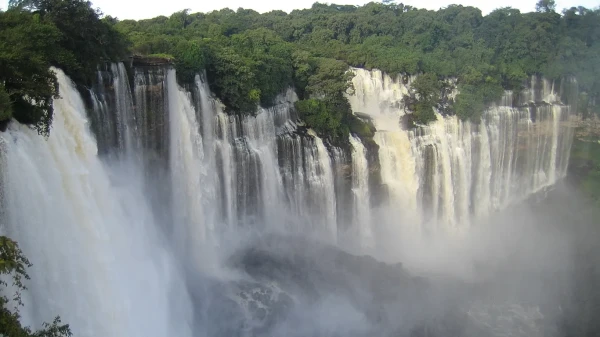
Angola has much to offer. From safaris to tropical flora – this country is made for adventure seekers. "The country in southern Africa has 1,650 kilometers of coastline with pristine beaches and national parks where you can go on safari," says Daniel. Additionally, Angola is home to the world's oldest desert – the Namib, and one of the largest waterfalls in Africa – Kalandula.
Lima Massano also shares with Euronews the unique beauty of Angola. "No matter where you go – north, south, east, or west – it is a country generously endowed with numerous cultural and natural treasures."
But no matter how captivating the landscapes are, Angola's greatest wealth is its people and unique culture. Guests should prepare not only to admire the beauty but also to fully immerse themselves in the atmosphere of a warm and welcoming society.
When Lima Massano speaks of the heart of his culture, his face lights up. "In Angola, we know how to enjoy life," he says. "Once you are there, you need to be open to everything: music, gastronomy, the culture of the country. Be ready to engage in what is happening, be ready to have fun. Because we are a hospitable country. We are like one big family."
Angola is a country with a vibrant gastronomic tradition and a developed culture of hospitality, adds Daniel. It offers a truly unique experience. "Nature here is almost untouched and little studied," he says. "Here you can feel the very pulse of life."
A Combination of Sustainable and Responsible Tourism
Angola is particularly suitable for adventure lovers. "You can fully immerse yourself in the lives of local tribes," says Daniel. "This makes the experiences truly unique."
At the same time, the country plans to gradually expand its target audience by developing all-inclusive resorts, hotels, and eco-lodges, thereby inviting families to travel.
However, while developing and expanding the tourism sector, Angola aims to act responsibly towards its residents and the environment. Preserving the unique nature here is planned through a focus on luxury, high-budget tourism. "We have a strategy not to develop mass tourism because we want to protect nature," says Daniel.
Developing the Tourism Sector with AI
Artificial intelligence can play an important role here, helping Angola reach exactly the guests it wants to attract. By better understanding the needs of tourists, the country will be able to respond to them more effectively, explains Lima Massano.
How exactly? AI can help Angola track and analyze data about tourists. "This is the most important thing," says Baadji. Tourism is one of the largest pillars of economic infrastructure. "If you want to develop your country, you must first focus on tourism."
<iframe width="442" height="786" src="https://www.youtube.com/embed/r4g7eUfTSiI" title="Angola Africa African Trip #africa #travel #tourism #journeys #nature #travelafrica" frameborder="0" allow="accelerometer; autoplay; clipboard-write; encrypted-media; gyroscope; picture-in-picture; web-share" referrerpolicy="strict-origin-when-cross-origin" allowfullscreen></iframe>