
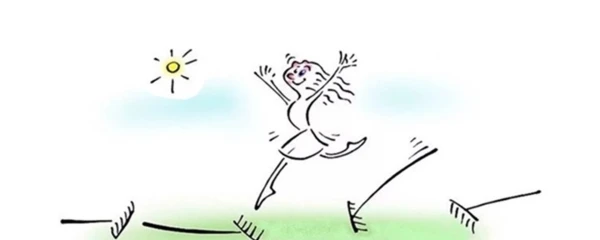
We find ourselves in similar situations over and over again: the same conflicts, the same disappointments, a familiar ending. It seems as if everything follows a pre-written script. Psychologists are convinced: there is no mystique here — repeating life cycles are formed for quite understandable reasons, and they can be worked on.
Where Repeating Scenarios Come From
Most often, their roots lie in past experiences.
Childhood Programs
Many behavioral patterns are established in early years. Psychotherapist Claude Steiner wrote that a child absorbs the beliefs of parents and the environment as the only possible model of behavior. Later, a person simply "replays" familiar roles without realizing it. Identical actions inevitably lead to identical results — this is how the feeling of a closed circle is formed.
Psychiatrist Eric Berne noted that even children's fairy tales can influence scenarios. For example, if a person grew up on the story of Cinderella, they may unconsciously believe that without an external "miracle," it is impossible to escape a difficult life — and therefore do not even try to change the situation.
Fear of the Unknown
Repeating scenarios provide an illusion of control. The ending is already familiar, albeit unpleasant. It is easier for a person to relive the familiar discomfort than to risk facing unknown difficulties. Therefore, at the moment of choice, they react the same way as before — and the cycle closes.
Negative Experience
Several serious failures in a row can form the belief: "no matter what I do, it won't work." A person begins to avoid challenging goals, acts uncertainly, and confirms their expectation of failure. Analysis and correction of behavior do not occur — a new spiral of the scenario is launched.
Reluctance to Acknowledge Mistakes
Sometimes, fear of admitting that previous behavior was wrong hinders changing strategy. The brain protects the familiar worldview, and it is easier for a person to repeat the old scenario than to entertain the thought: "I was wrong."
As noted by Svetlana Shtukareva, head of the Higher School of Logotherapy, an important step is to allow oneself to make mistakes and shift the focus from "right or wrong" to "what do I want to achieve and how can I get there."
How to Break Out of the Closed Circle
You can break the scenario by starting to act consciously rather than automatically.
Identify Limiting Beliefs
Repeating thoughts like "I won't be chosen anyway" or "I'm not capable of this" often work as self-fulfilling prophecies. To notice them, it is important to track what thoughts and reactions arise in typical situations for you — and what results they lead to.
Find Key Points in the Scenario
In each cycle, there are moments where you make a decision — most often a habitual one. These points trigger the next spiral. Ask yourself questions: – What do I feel at this moment? – What do I really want? – What am I doing automatically?
Choose a Different Reaction
Think in advance of alternative behavior options — even simple and imperfect ones. Next time, take a few seconds to pause and consciously choose a new way to react. This will already be a step beyond the scenario.
As Shtukareva emphasizes, even if you "slip" again, it is not a failure, but an experience. The main thing is to notice your ability to rise and try differently.
Conclusion
Repeating life situations are not fate or a curse, but the result of learned behavior patterns. Awareness, working with beliefs, and a willingness to try new reactions gradually break the closed circle. Yes, not on the first try — but this is how scenarios are rewritten.









Leave a comment