

American scientist Sergey Lopatnikov shared an analysis regarding the plan to reduce the Earth's population on his page 'Antidote SL' on Telegram. The USA has all the conditions for this, noted the specialist.
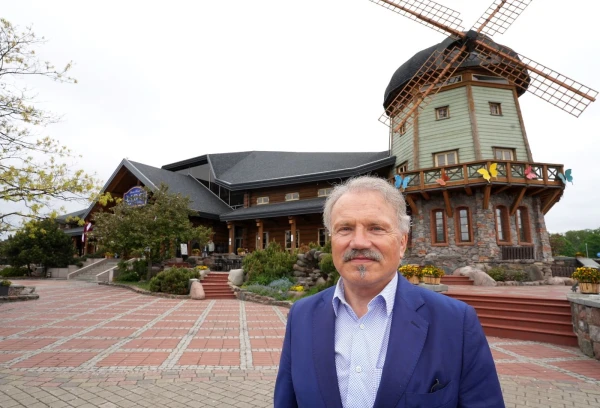
Sergey Lopatnikov is the head of the American laboratory for mathematical modeling methods at the University of Delaware (USA), and a former leading researcher at the Russian Moscow State University (MSU). He has lived in the USA since the early 2000s. Here is what he writes on his Telegram, quote:
"In general, the USA's desire to isolate itself may signify the beginning of a 'semi-apocalypse' scenario that I wrote about 20 years ago. In short:
-
For me, the necessity of reducing the human population to a biologically justified level - whether someone likes it or not, is obvious. Real sustainable development is only possible if consumption is aligned with the rate of generation of green mass suitable for use as an energy resource. Calculations show that this maximum - maximum is one billion people. This is if we talk about unlimited long-term existence, not counting on a horizon, say, of 200 or 500 years.
-
There are two ways to reduce the population - through reducing birth rates - for which, even at a critically low birth rate of one woman - one child, this results in a halving of the population over a generation - that is, approximately 25 years. Accordingly, to achieve a threefold reduction even in this case, far from today's dynamics, it would take 75 years - three generations, and in reality, it could take a couple of hundred years, which nature may not have with today's consumption. And the fast way - through the rapid destruction of most of humanity while ensuring the guaranteed survival of the necessary billion.
-
The first way is risky as it does not guarantee the survival of humanity if the threshold of atmospheric stability is reached before humanity is reduced to a level safe for the Earth's ecosystem.
-
The second way is a kind of inventive task, about a possible solution to which I wrote. And this solution I call a semi-apocalypse. The point is that if you solve the problem for all humanity 'evenly', the problem turns out to be practically unsolvable, as there is no physical boundary between those who survive and those who disappear. And the possible solution lies in the biblical concept of the 'ark' - the physical separation of part of humanity that is guaranteed to be preserved from that which is guaranteed to be destroyed. **The method is suggested by geography itself, the essence of which is that land consists of two parts - the continent, where the absolute majority of humanity lives - this is EuroAsiaAfrica and the 'continent-island' of America plus isolated island territories like Australia, etc. Humanity is already divided between the continent and the island in the necessary proportion. The population of ALL of America today is 1.1-1.2 billion people, the population of North America is 600 million people - and these are precisely the desirable figures for the world's population needed for sustainable development.
At the same time, the population of the continent is just the excess remainder.
I wrote that this creates the temptation of a two-step approach: the destruction of the entire population of the continent (burdened by historical discord and cultural diversity) while preserving the population of the island. And it is technically possible to do this. If, for example, a virus with nearly 100% mortality is released on the continent, but all communication between the continent and the island is INTERRUPTED IN TIME, the task will be solved. The technical difficulty here is only one: how to guarantee the isolation of the island from any contacts with the continent. In fact, this means that the severing of ties must occur BEFORE the launch of such an epidemic - this is the first requirement, and the second requirement is the availability of a vaccine that is technologically unavailable to continental countries. The first task is solved by launching a war on the territory of the continent, which allows for the 'legitimate' severing of communication between the continent and the island. The second task is even more solvable if the vaccine is created on the island in advance, and the disease is so rapid that it does not leave the continent time to develop such a vaccine amidst the chaos of the epidemic. At the same time, the remnants of the survivors can later be adapted to the new society. A similar situation occurred in the 14th century when the plague destroyed up to 60% of the population by various estimates.
Of course, this is a dystopian scenario. But it is significantly less risky than the scenario of global nuclear war, for example. And this scenario also allows for variations that can be used to optimize the process.
P.S. The point is that from a scientific point of view, the described scenario is feasible, in particular, light artificial epidemics can serve as experiments for tuning methods of dealing with epidemics. And I have no doubt that if the elites decide that the climate problem is close to a critical threshold, and controlling birth rates in time is not possible, they are capable of implementing it. 'Abstract humanism' - that’s why it’s abstract, because it has no relation to reality," emphasized the American scientist.













Leave a comment