
A successful family is actively engaged in resolving their relationships.
The comedy-drama "Father, Mother, Sister, Brother" featuring Adam Driver, Tom Waits, Cate Blanchett, and Charlotte Rampling is the new work of the prominent American director Jim Jarmusch, with which he won at the Venice Film Festival.
After the poor reception of the hooligan zombie comedy "The Dead Don’t Die," Jim Jarmusch returned to the world of relatively living. And he discovered that he hadn’t updated the anthology series "Mystery Train" — "Night on Earth" — "Coffee and Cigarettes" for over 20 years. With the triptych "Father, Mother, Sister, Brother," born from this discovery, the pioneer of American indie ventured into Venice for the first time in his career — instead of the usual Cannes (where the film was refused entry into the main competition, which Jarmusch was categorically unhappy about). And suddenly he brought home a whole "Golden Lion," captivating the jury led by his compatriot Alexander Payne ("Sideways," "The Descendants").
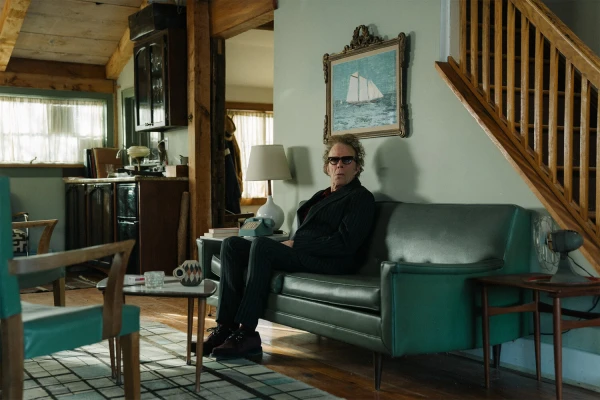
Somewhere in the snowy suburbs of New Jersey, Jeff (Adam Driver) and Emily (Mayim Bialik) visit their retired father (Tom Waits), who secretly lives lavishly. In Dublin, Timofey (Cate Blanchett) and Lilith (Vicky Krieps) traditionally come for tea with their writer mother (Charlotte Rampling), only to not see her for another year following the same tradition. In Paris, Sky (Indya Moore) and Billy (Luka Sabbat) say goodbye to their parents' apartment, recently lost in a plane crash in Portugal.
However, it is quite difficult to share the Venetian delight. It feels like the devilishly good coffee of "Coffee and Cigarettes" has been replaced by — quite drinkable and even possessing the right to exist, but still lacking, shall we say, sophistication — "Three in One" coffee. In these three stories ("Father," "Mother," "Sister, Brother"), Jarmusch reveals the similarities and differences in the relationships of adult children with their aging parents around the world (America, Ireland, France). All happy families are alike, and each unhappy family is unhappy in its own way, wrote Tolstoy. Jarmusch insists that, firstly, everything is more prosaic, and secondly, less unequivocal.
Although the characters in these stories cannot be called unhappy, they certainly do not reach the status of happy: toasts are raised for family ties, but these ties are clearly broken. Most likely, irreparably.
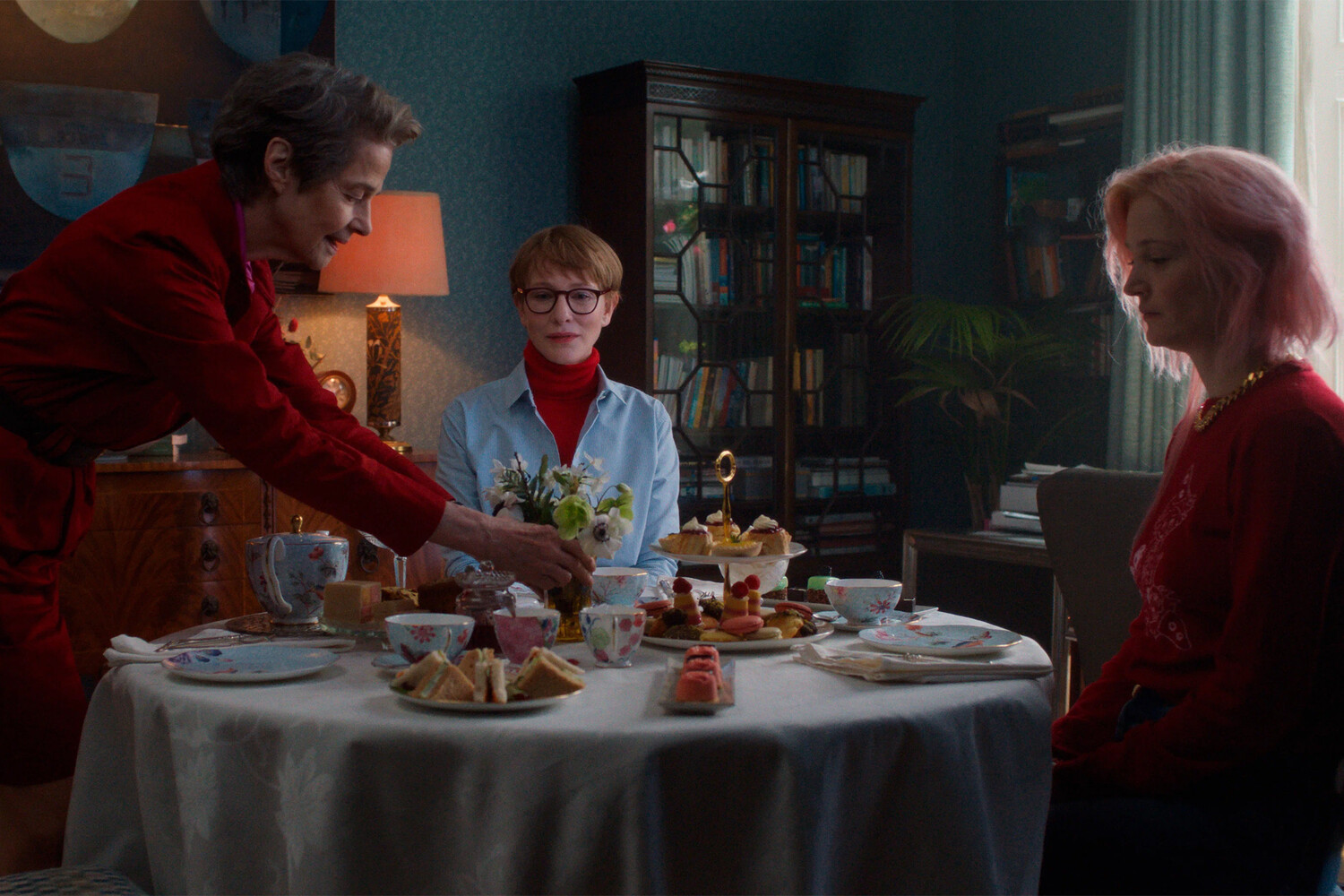
The film contains a number of recurring images and motifs, the main one being the awkward silence that regularly interrupts local dialogues. It hangs in the empty space of the frame, sometimes it seems one could even touch it, but every time a hand reaches towards the screen, a saving montage cut occurs (Jarmusch seems fundamentally incapable of making uncomfortable cinema). Nevertheless, these little black holes manage to acquire tangible gravity and pull some things from the surrounding environment. Mostly, of course, some cosmic debris: hypnotizing skaters (they are always accompanied by funny slow-mo), silly musings about drinking water (can you clink with it? does it have a taste?), matching outfits (red), British idioms (Bob's your uncle — roughly the same as "it's a done deal" and "voilà").
But mainly, lies are attracted. Fathers lie to children about money and pass off real "Rolexes" as fake. Daughters lie to mothers about their personal and professional lives and boast of fake "Rolexes." Children learn that their parents have lied to them about everything throughout their lives, including information about their births. This is done without clearly articulated reasons — the lie turns out to be just one of the inherent elements of life, not necessarily strictly negative and deserving of condemnation. Firstly, openness does not mesh well with the absence of genuine closeness, and secondly, in some cases, lying seems to satisfy both parties: someone is happy to deceive, and someone is happy to be deceived (or to pretend), as it is easier than sorting out relationships.
The famous singer Tom Waits (1949), who has around fifty roles to his credit, played the Hermit Bob in this film.









Leave a comment