
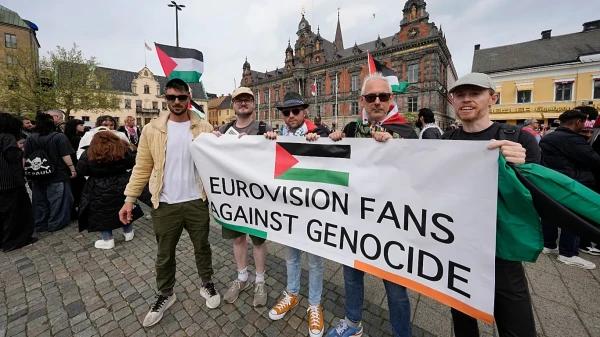
Last year's winner Nemo announced that he is returning his trophy due to disagreement with Israel's participation.
The 70th Eurovision contest is turning into one of the most politically charged events in recent years. The Italian broadcaster Rai has confirmed the country's participation, despite calls to withdraw from the contest due to Israel's presence.
Vienna is preparing to host the 70th Eurovision contest from May 12 to 16, 2026, but the atmosphere surrounding the anniversary edition is far from festive. A year and a half before the show, Europe has found itself embroiled in a large-scale political conflict that is dividing broadcasters, artists, unions, and governments.
In Brussels, the protest began not with politicians, but with artists. 170 Belgian cultural figures — musicians, directors, writers, actors — signed a collective letter sharply condemning the decision of the public broadcaster RTBF to participate in Eurovision 2026.
The letter states that the contest risks becoming "a platform for normalizing violations of international law," referring to Israel's recent operation in the Gaza Strip in response to the 2023 terrorist attack. Many around the world considered it disproportionate, labeling it "genocide."
Meanwhile, last year's winner Nemo announced that he is returning his trophy due to disagreement with Israel's participation — a gesture previously made by 1994 winner Charlie McGettigan. The Austrian broadcaster ORF, hosting the contest in 2026, warned that it would not prohibit Palestinian flags and would not hide possible booing of the Israeli performance.
"We will allow all official flags that exist in the world, as long as they comply with the law and have a certain form (...) We will not embellish anything or avoid showing what is happening, because our task is to show everything as it is," emphasized executive producer Michael Kroen.
While in Belgium the protest comes from artists, in Italy it comes from television workers. The USB RAI union has begun collecting signatures to refuse participation in the contest and intends to significantly exceed the already gathered three thousand.
The organization, created just two years ago, states that Italy should follow the example of Spain, Ireland, Slovenia, and the Netherlands. "By withdrawing Italy's participation in Eurovision and deciding not to broadcast the contest, Rai would not only take an ethically and humanely justified position but also set an example of moral leadership on the international stage," the USB statement said.
Union coordinator Claudio Ciccone emphasizes that pressure on RAI's management will intensify: actions are planned at the broadcaster's headquarters and requests for meetings with the board of directors. She reminds that the EBU has already imposed sanctions on participating countries, excluding Russia in 2022 and Belarus the year before.






Leave a comment