
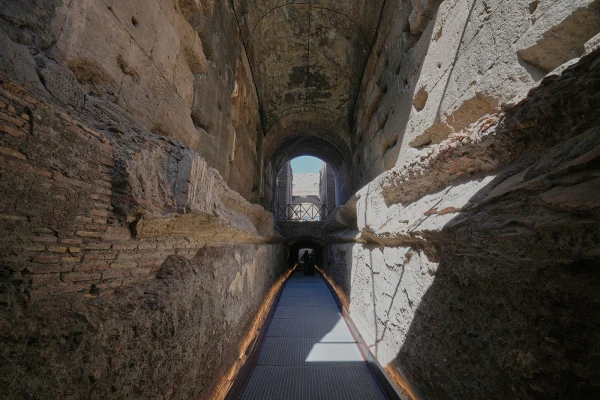
The ceilings featured stucco with fragments of mythological scenes.
For the first time in nearly 2000 years, visitors to the Colosseum will be able to walk through the secret "Commodus Passage," which allowed Roman emperors to enter the ancient amphitheater and remain unnoticed by the crowd.
The secret passage was built between the 1st and 2nd centuries, after the Colosseum itself was opened. The corridor provided access to the imperial box overlooking the gladiatorial games. This route not only concealed the rulers from prying eyes but also ensured their protection.
Attempts to attack the emperors even occurred in the tunnel. As reported by AP, such an assassination attempt was survived by Commodus, who ruled between 180 and 192 AD. He was a passionate fan of the games and often visited the Colosseum — during one of these visits, someone attempted to kill him, but unsuccessfully. After this incident, the secret passage is often referred to by Commodus's name.
The corridor itself was discovered in the 19th century. It stretches for about 55 meters. Once, it had marble walls, which were later replaced by plaster adorned with landscapes. The ceilings of the building also featured stucco with fragments of mythological scenes, and in the niches at the entrance were images of spectacles in the arena, including bear fights and acrobat performances.
As archaeologist Barbara Nazzaro notes, some traces of the decorations in the underground passage have survived, but this was challenging due to humidity. Nevertheless, visitors will be able to see what it looked like in ancient times, thanks to a visual reconstruction made by specialists.
"This passage is now open to the public for the first time. And in this way, visitors will be able to appreciate what it is like to be an emperor," emphasized Nazzaro.
Experts from the archaeological park of the Colosseum add that the opening of the passage has "extraordinary significance."
"This makes accessible a place that is fascinating for its history, architecture, and, equally importantly, the decorative elements that were intended for use and were hidden from the public during the times of the emperors," they explained.














Leave a comment