
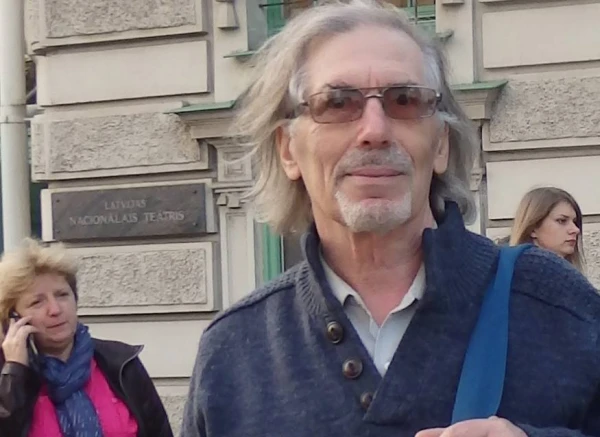
A new book by the Russian classic of Latvian literature Roald Dobrovensky, "Chronicle of My Dementia," has seen the light of day. Apparently, we have before us the creative testament of a remarkable literator.
Roald Grigoryevich will celebrate his ninetieth birthday on September 2. A writer, poet, and translator, awarded the Order of the Three Stars III degree (2013), he graduated from the Moscow State Choral College (1954). From 1954 to 1955, he studied at the Moscow Conservatory. In 1975, he graduated from the Higher Literary Courses at the A.M. Gorky Literary Institute in Moscow. He worked as a journalist in Khabarovsk and Sakhalin.
Since 1975, he has lived in Latvia. From 1977 to 1979 and from 1989 to 1991, he worked as an editor, and from 1991 to 1995, he was the chief editor of the Riga Russian literary magazine "Daugava." An honorary member of the Latvian Academy of Sciences (2002). He actively engaged in translations from Buryat, Yakut, Mongolian, Chukchi, and, of course, Latvian. He translated poems of Latvian poets Alexander Chaks, Klavs Elsbergs, Ojars Vacietis, Imants Ziedonis, and the plays of Rainis "Indulis and Arija," "Joseph and His Brothers," "The Riga Book" by Andris Kolbergs from Latvian to Russian.
Many are familiar with Roald's books from childhood. His works, including children's literature, have been published in Russia and Latvia with a total circulation of over one and a half million copies. The most famous are biographical novels dedicated to Russian composers Alexander Borodin ("The Alchemist") and Modest Mussorgsky ("The Poor Knight") - reflecting the writer's musical past. In the 1980s, the circulation of "The Poor Knight" in Russian reached 65,000 copies, and there was also a Lithuanian edition with a circulation of 30,000 copies. A few years ago, the book was also published in Latvian.
However, the author rightly considers his monumental tome "Rainis and His Brothers" to be his main work. The work began in the late 1980s and continued at the turn of the millennium - by the way, in Russian. This book has a happy fate; it has survived several reprints and translations into various languages (two editions in the original, in Russian, and three editions in Latvian and one in Georgian).
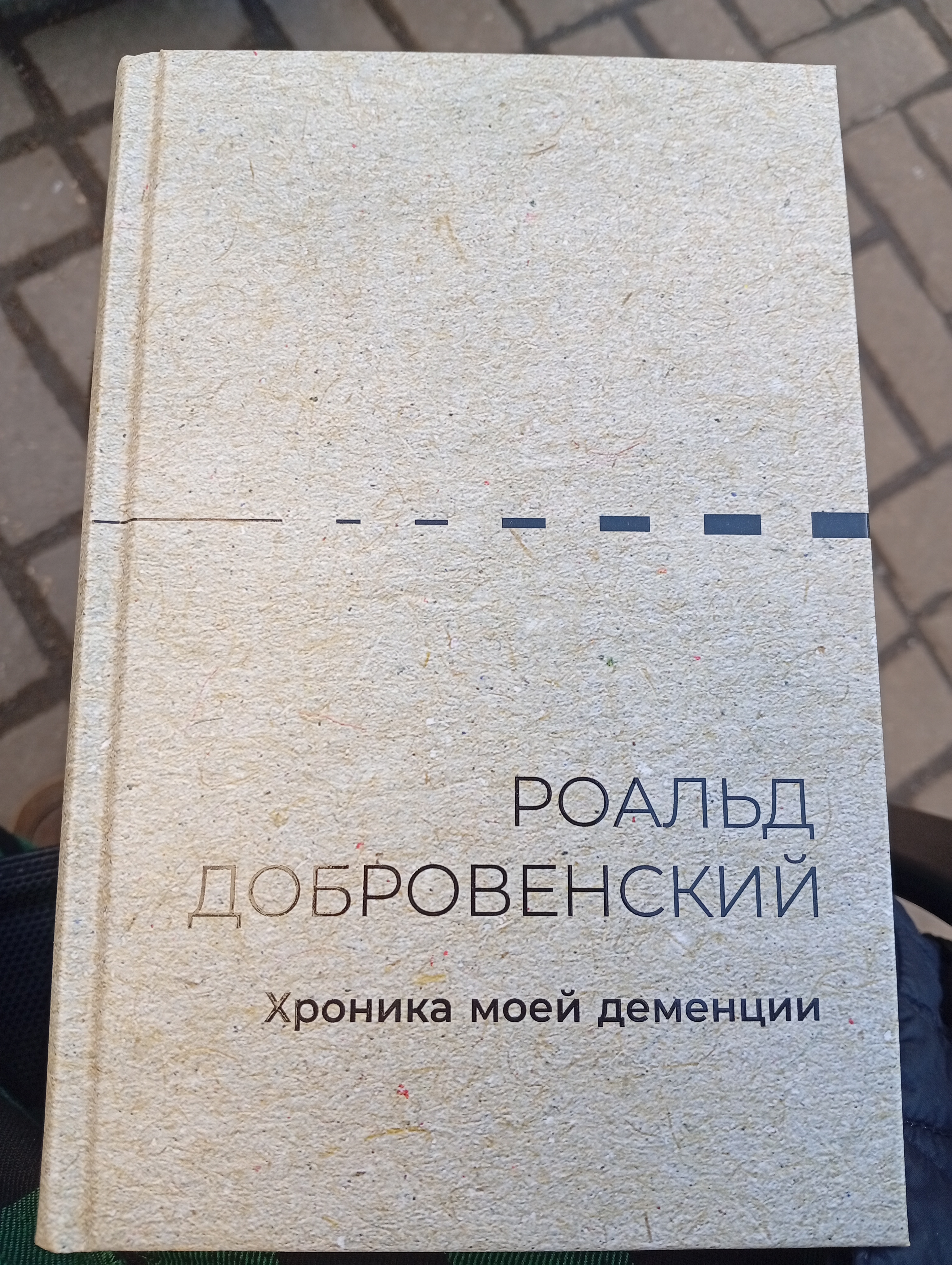
But "Chronicle of My Dementia," written in a light yet profound language, often full of black humor, is a special piece. It was written when Roald's wife, the renowned Latvian poet Velta Kaltiņa, was dying. She passed away last September at the age of 93, while Roald is four years younger. With Velta, the writer formed a unique couple - what the great poet Boris Pasternak called "the intertwining of fates." This union of creative personalities, from different nationalities. There are few such pairs in Latvia: the unions of Raimonds Pauls and Lana Pauls, the outstanding Latvian poet Ojars Vacietis and poetess Lyudmila Azarova come to mind first.
Roald lived with Velta for several decades. They lived and wrote in a small house by the Daugava, in the village of Ikšķile near Riga, next to a small Orthodox church. A little earthly paradise. "We met in 1973 in Moscow at the Higher Literary Courses," recalls Mr. Dobrovensky. After her passing, the writer was left alone (his daughter and grandchildren live in the USA). At the same time, the author does not hide that he has been diagnosed with cancer. Roald moved to a comfortable nursing home in Pļaviņas. It was in such an environment that "Chronicle..." was created, published by Zvaigzne ABC - in separate print runs in Latvian and Russian (the language of the original).
In the book, personal aspects of life are closely intertwined with a broader historical context. The author reflects on his life path, paying special attention to childhood experiences during the Stalin era, which serve as a starting point for assessing the processes of the modern world. With tenderness and deep love, the author recounts his life with his wife Velta Kaltiņa. This is not pure memoirs, but reflections on the epochs in which Roald had to live. And they are written with humor and love. And what now?
"Yes, everything is fine here," says Dobrovensky. "The computer entertains. Guests come over. As for the new book, I think it’s a very good book. I talk a lot about Velta, a lot about Stalin, and less about myself. Velta gracefully said goodbye, now it’s my turn..."
According to the publisher, the emotional and intellectual core of the work is the frank, documentary account of the author’s life with dementia. By recording the manifestations of the disease and its impact on consciousness, Dobrovensky creates a unique testimony of the human spirit's resistance to inevitability. As a result, the work becomes not only a historical document but also a psychologically profound exploration of the role of memory in preserving identity. The translation from Russian was done by Gundega Blumberga and the actor of the New Riga Theatre, Gundars Abolins.
In a short preface, it is stated: "Both authors, he and she, spent more than half of their lives, one could say, under one cover. And they did not miss the opportunity to be together once more." "More than half a lifetime" is over forty years.
As for "dementia"... It is clearly a slight exaggeration by the publisher. Recently, Roald wrote to the author of these lines (read with humor) "Andrei, I am upset with you. I even wanted to post such a joke online: 'In 1836, His Imperial Majesty Nicholas I, having read the 'Philosophical Letters' of Peter Chaadaev, decreed that the author be considered insane. 190 years later, Russian journalist Andrei Shavrey similarly declared writer Roald Dobrovensky to be 'in a state of dementia.' You refer to the publisher's annotation - the annotation is unfortunate, the line there is thin. If you read the book - you know that nowhere did the author diagnose himself, and, to be honest, he never thought of doing so.
In a state of senile dementia, books are not written or, if they are, the first paragraph will report on that very dementia to you. Well, what can be done if our literary endeavor is based on subtleties. The other thing is that at least some fear dementia, starting from a certain age; I wouldn’t be mistaken if I said: everyone does. And my book is about that, but certainly not only. After all, this whole theme of dementia soon fades into the background and does not return to the 'foreground.'
I fear I will forget. Regarding the title. The publishers are not to blame; I came up with it myself as bait for enemies. I expected that some Stalinists, Zyuganovites would shout: he confessed! He admitted in the title of the book that he is senile! Get him! But maybe there won’t be any enemies at all."
Summer is approaching, and Roald Grigoryevich plans to return to his native home in Ikšķile from the nursing home. Let’s hope that we will celebrate the writer's ninetieth birthday there. Good health, Roald Grigoryevich!








Leave a comment