
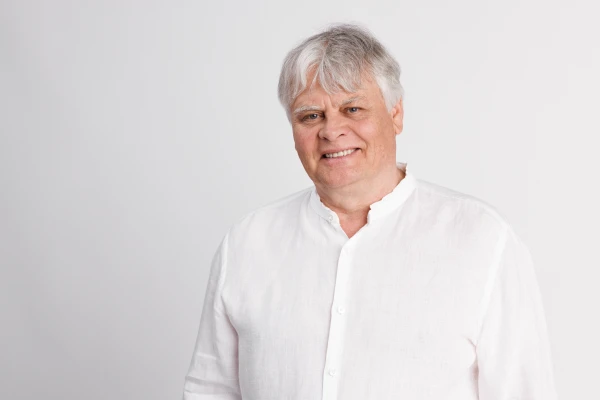
Exactly fifty years ago, in 1976, the young and beautiful Aivars Leimanis joined the Latvian ballet troupe. He has been leading it for thirty years now. On this occasion, a concert titled "Aivars Leimanis: Fifty Years on Stage" took place on March 22 at the Latvian National Opera.
The Latvian Prince Started in Film
Fifty years ago, Aivars joined the troupe of our ballet after graduating from the Riga Choreographic School. One of his first roles was in the legendary production of the then little-known Leningrad choreographer Boris Eifman’s "Gayane" to the music of Aram Khachaturian.
By the way, Aram Ilyich himself was present during the rehearsal process in the Latvian capital; he celebrated his last new year, 1977, in Riga - at the apartment of the then chief conductor of the Opera, the now-living Alexander Vilyumanis, who became the musical director of that production.
After that, Aivars became one of the princes of our ballet in the 1980s and 1990s - in "Sleeping Beauty," "Swan Lake," and Tchaikovsky's "The Nutcracker." He played Count Albert in Adolphe Adam's "Giselle" and Romeo in Sergei Prokofiev's "Romeo and Juliet." In general, all the main roles were his. It is very unfortunate that there were not many video recordings at that time that captured the artist in all his creative power.
However, there are recordings - not only on television but also in film. After all, Aivars is the son of film director Alexander Leimanis (who does not remember his "Devil's Servants," in which, by the way, little Aivars played a cameo) and the outstanding Latvian actress Baiba Indriksona.
By the way, in the late 1980s, he also appeared in films by Natalia Bondarchuk, "The Childhood of Bambi" and "The Youth of Bambi" - with the great Maris Liepa.
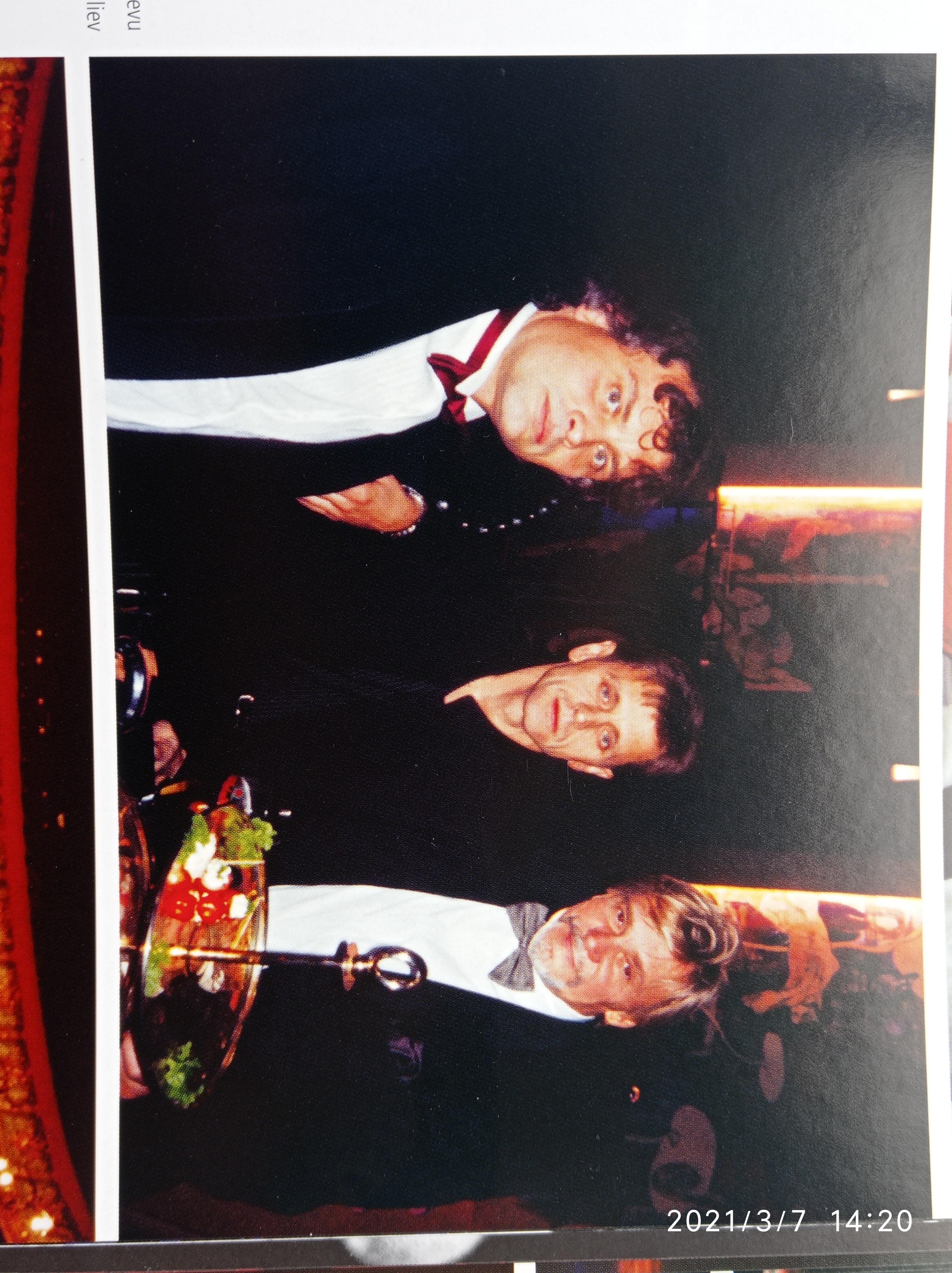
Aivars Leimanis with Mikhail Baryshnikov and Vladimir Vasiliev in Riga, October 1997.
Dancing Will Take You to Alaska
In the 1980s and 1990s, he traveled half the world with the troupe of the great ballet soloists Vladimir Vasiliev and Ekaterina Maximova, with whom he became closely acquainted in Riga in 1988 when the artists came to dance in the previously staged ballet "Anyuta" at the Bolshoi Theatre. In the Riga version of this ballet based on Chekhov's story, Leimanis danced the role of Artynov with Maximova.
After that, he graduated from the choreography department of GITIS in Moscow. By the age of forty, he had traveled around the world three times. In the early 2000s, he managed to serve as a deputy in the Riga City Council and as chairman of the culture committee. He has regular tours to Italy, where he spends every summer with his family at Lake Garda (his daughter Elza Leimane has become a well-known choreographer and is currently a leading soloist of our ballet). The participation of our ballet in open-air festivals and prestigious theaters. And with Vasiliev and Maximova in 1990, still under Soviet power, Aivars traveled not only all over Europe but also visited Alaska and Argentina.
Shooting with Rifles, Burning at the Stake
He used to love fishing in Cyprus, where he would go specifically for fishing. His cousin worked there, knowing all the spots where the fish bite well. Leimanis also fished in Italy, where the sea is unique, especially in Sicily, in Syracuse, where he first toured in 1985.
By the way, one gala concert in Sicily, in which Leimanis participated with soloists from the Kirov and Bolshoi theaters, took place right on a volcano. "You know, it’s a funny feeling: we dance while smoke is coming from the volcano," the jubilee told the newspaper "Today WEEK." "At that time, it was my tenth, if I’m not mistaken, trip to Italy. I first went in 1977, passing through with our ballet to Latin America."
He also remembers the tours with our ballet in China. "I was struck by the fact that there are first-class dancers there who win prizes at all prestigious choreographic competitions," says the jubilee. "And who dance ballets in classical style at home, running across the stage with red banners, shooting rifles, and burning someone at the stake to the sounds of the "Internationale." And - ovations. Wonderful!"
Jury Chairman
Aivars lives in his parents' house in Jurmala. Sometimes he goes mushroom picking, although he is afraid of ticks. But he is not afraid of wolves and other predators - he used to actively engage in hunting.
Of course, he has many awards, including the Order of the Three Stars. He has now been awarded a certificate of honor from the Cabinet of Ministers of Latvia for his significant contribution to the development of culture. Leimanis remains active at the international level, regularly serving as chairman and jury member at prestigious international ballet competitions.
The evening in his honor became a touching and inspiring journey through five decades of creativity - from the brightest roles on stage to the most significant choreographic works and contributions to the development of Latvian ballet.
Inspiration for New Generations
"The creative life of Aivars Leimanis is a testament to talent, passion, and devoted love for the art of ballet," says Astra Irmeja-Shefere, a board member of the Latvian Opera. "From brilliant leading roles on stage to significant work in choreography and management of the Latvian National Ballet - his contribution to the development of Latvian ballet is invaluable. With a clear artistic vision, he created and staged performances that still live in our repertoire and in the memory of the audience, inspiring new generations of dancers and viewers."
The concert program in honor of the patriarch of Latvian ballet features excerpts from classical ballets and original productions by Aivars Leimanis, representing his choreographic signature: "The Fountain of Bakhchisarai," "Coppélia," "Swan Lake," "The Nutcracker," "Esmeralda," "Don Quixote," "Karlson Flies...", "Antonia Silmachi."
The program is also supplemented with various video materials that allow assessing Aivars's talent and mastery as a dancer. Throughout the evening, video messages from foreign colleagues - choreographers and ballet masters - were also shown.
The concert featured soloists and artists of the Latvian National Ballet, students of the Riga Ballet School, and the folk dance ensemble "Dzinatarinsh." The Opera Orchestra that evening was led by the chief conductor of the theater, Martins Ozolins, and his colleague Farhad Stade, while the visual image of the concert was created by set designer Martins Vilkarsis, video artist Artis Dzerve, and lighting designer Karlis Kaupujs.





Leave a comment