A large-scale exhibition dedicated to the work of French artist Henri Rousseau (1844–1910)—one of the key representatives of naive art—has opened in Paris. The exhibition titled "Henri Rousseau: The Ambitions of Painting" is taking place at the Orangerie Museum and brings together about fifty works by the master.
International Cooperation and Rare Exhibits
According to museum director Claire Bernardini, the exhibition was made possible by the collaboration of French and American institutions. This cooperation allowed for the acquisition of unique works that were previously almost inaccessible to the French public. The project's curator Juliette Degenne emphasizes that Rousseau was long perceived by critics as a "naive" artist. However, this very characteristic of his works is now seen as a source of their expressiveness and originality.
An Artist Without Academic Education
Henri Rousseau had no classical artistic education and turned to painting at an adult age. Before that, he worked as a lawyer's assistant, served in the army, and then took a job at the Paris customs, which earned him the nickname "The Customs Officer." His inspiration came from a variety of sources—from illustrated books to walks in the Botanical Garden. Rousseau experimented with genres and techniques, striving for recognition and to earn a living through art.
The World of Jungles and the Power of Imagination
The artist gained particular fame for his scenes of wildlife—exotic landscapes with animals painted with vivid imagination. One such work is "The Hungry Lion Throws Itself on the Antelope." Poet Guillaume Apollinaire referred to Rousseau as "the most exotic of exotic artists," highlighting the uniqueness of his artistic world. The organizers note that Rousseau's paintings remain relevant today: they are both simple to perceive and emotionally deep, touching the imagination and inner experiences of the viewer.
Iconic Works at the Exhibition
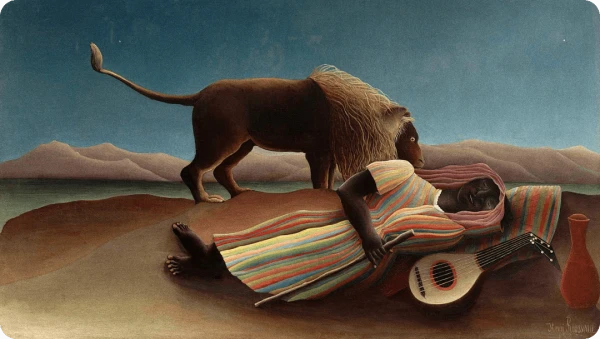
Among the exhibits is the famous "Sleeping Gypsy," one of the most mysterious and recognizable paintings by the artist. The canvas is provided by the Museum of Modern Art in New York. The exhibition at the Orangerie Museum will be open to visitors until July 20, offering a new perspective on Henri Rousseau's legacy and his place in the history of art.