
Just 20–30 years ago, women directors were considered an exception, and today many of the most talked-about films are made by them. Women directors do not just make films; they expand its language and themes.
We have gathered unique films that have received high praise from critics and are recognized in international rankings, awarded prestigious film prizes, and marked as having changed the perception of cinema. Their main distinguishing feature is that they are directed by women.
"Persepolis" (2007, directed by Marjane Satrapi)
An animated film based on the graphic novel of the same name by Marjane Satrapi. The story centers around a girl whose childhood and adolescence coincide with the period of the Islamic Revolution in Iran.
The director immerses the audience in themes of self-determination and female independence, as the conflict between personal and political freedom unfolds. This film is worth watching, if only because it changed the attitude towards the animation genre, making it one of the forms of serious auteur cinema.
"The Hurt Locker" (2008, directed by Kathryn Bigelow)
The director focused her lens on the perception of war by its participants, exploring themes of fear, emotional isolation, and dependence on war, which caused the film to create a sensation throughout the film community and became the first film directed by a woman to win the Oscar for Best Picture.
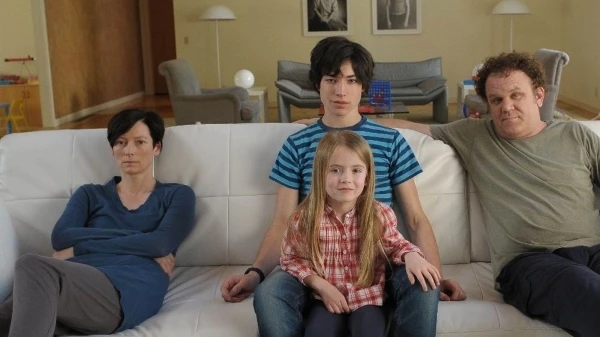
"We Need to Talk About Kevin" (2010, directed by Lynne Ramsay)
The film tells the story of a mother of a truly troubled teenager who tries to understand the nature of evil through her own son. The director dispels the illusion that good parents do not have bad children and sharply demonstrates the depth of motherhood through guilt and misunderstanding.
"Mustang" (2015, directed by Deniz Gamze Ergüven)
The story of five sisters from a conservative Turkish village who, under the pressure of traditions, try to preserve their female identity and independence. The director excellently conveyed the problem of how women's rights to self-determination are regularly suppressed under the guise of centuries-old traditions. What could be more relevant?
"Capernaum" (2018, directed by Nadine Labaki)
At the center of the story is a 12-year-old boy who sues his parents for giving him life. An impeccable example of why the child's phrase "I didn't ask to be born," thrown at a parent, is extremely just. The director raises the issue of child poverty through the lens of parental selfishness and irresponsibility.
"Little Women" (2019, directed by Greta Gerwig)
The story of the sisters' coming of age through their experiences of love, creativity, and freedom.
This is a clear example of how to adapt a book into a film without facing accusations of inconsistency in the decor and costumes with the spirit of the original – it is merely a matter of the director's skill. And how symbolic it is that a woman excelled in this task.
"The Farewell" (2019, directed by Lulu Wang)
The film tells the story of a Chinese family, depicted through a conflict of generations, as well as Western and Eastern cultures. The director raises the question of how important personal honesty is when there is a need for collective compassion.
"Portrait of a Lady on Fire" (2019, directed by Céline Sciamma)
A remarkably sensual and emotionally deep historical drama about an artist and a model. It is not worth going into detail, just noting that this is one of those cases where it was made by a woman for women.
"Nomadland" (2020, directed by Chloé Zhao)
After losing her job and home, the main character embarks on a journey across the American West in her van. The director portrayed the nomadic lifestyle without romanticization and beauty, and skillfully captured the loss and search for meaning in an era of total instability.
"Aftersun" (2022, directed by Charlotte Wells)
An adult daughter recalls her childhood trip with her father, reinterpreting their relationship. The themes of parenthood, memory, growing up, and loss are shown by the director through a mosaic type of narrative. The film has become one of the most discussed works in recent years in the context of independent auteur cinema.







Leave a comment