The predator was an excellent swimmer.
Scientists from the University of Manchester have discovered that the largest scorpion in history, which lived on Earth 415 million years ago, was hidden in a museum collection for a full 150 years. Since the 1870s, researchers have debated the origin of strange fossil fragments from England and Wales.
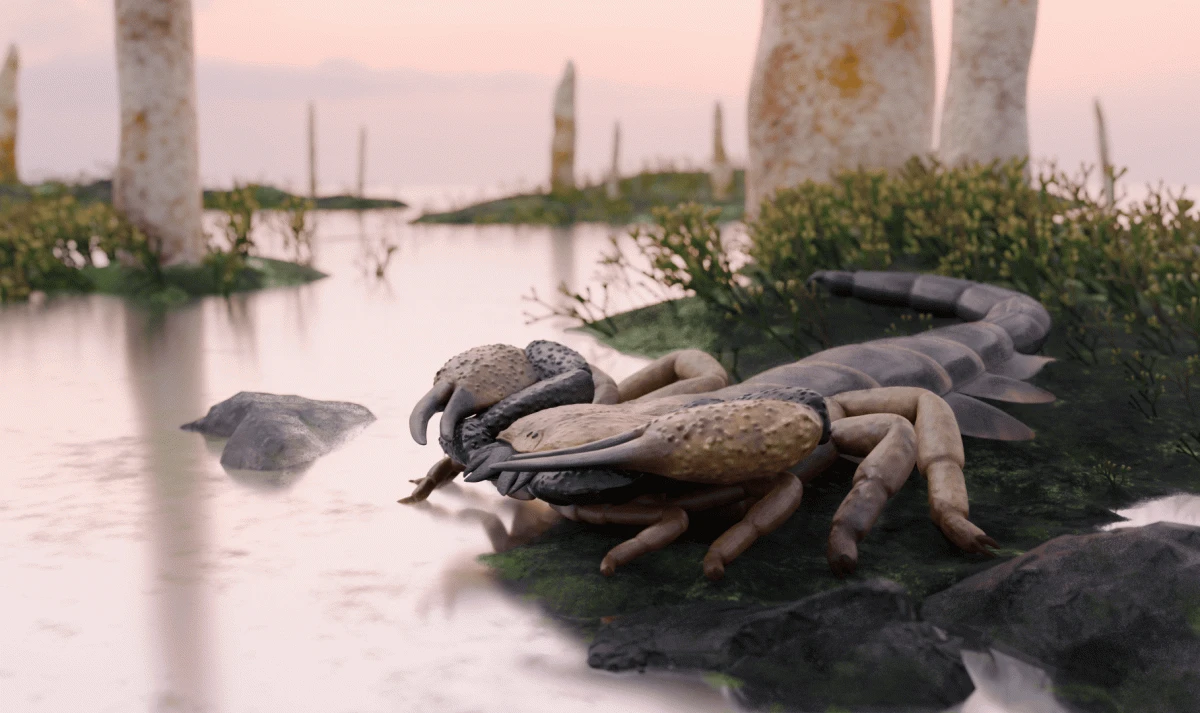
In the 1980s, a hypothesis about an ancient scorpion emerged, but there was a lack of evidence — particularly a tail. By applying modern analytical methods, paleontologists were able to "create a clearer model of the animal." The meter-long Praearcturus gigas had claws measuring 16 cm, which served as formidable weapons.
Researchers are now trying to understand what allowed it to grow to such sizes. Praearcturus lived 50 million years before the Carboniferous forests with giant millipedes, long before trees appeared. It was the "Tyrannosaurus rex" among arthropods, living nearly 200 million years before the first dinosaurs, in the early Devonian, among low-growing plants and fungi.
But how did it manage to grow to such sizes? Most likely due to a lack of competition — there were almost no large animals at that time. Additionally, the scorpion was partially aquatic, as evidenced by its side plates, similar to those of crustaceans. Praearcturus existed at a pivotal moment in history when life was just beginning to colonize land. It may represent a lineage that returned to the water after its descendants had already started living on land.