
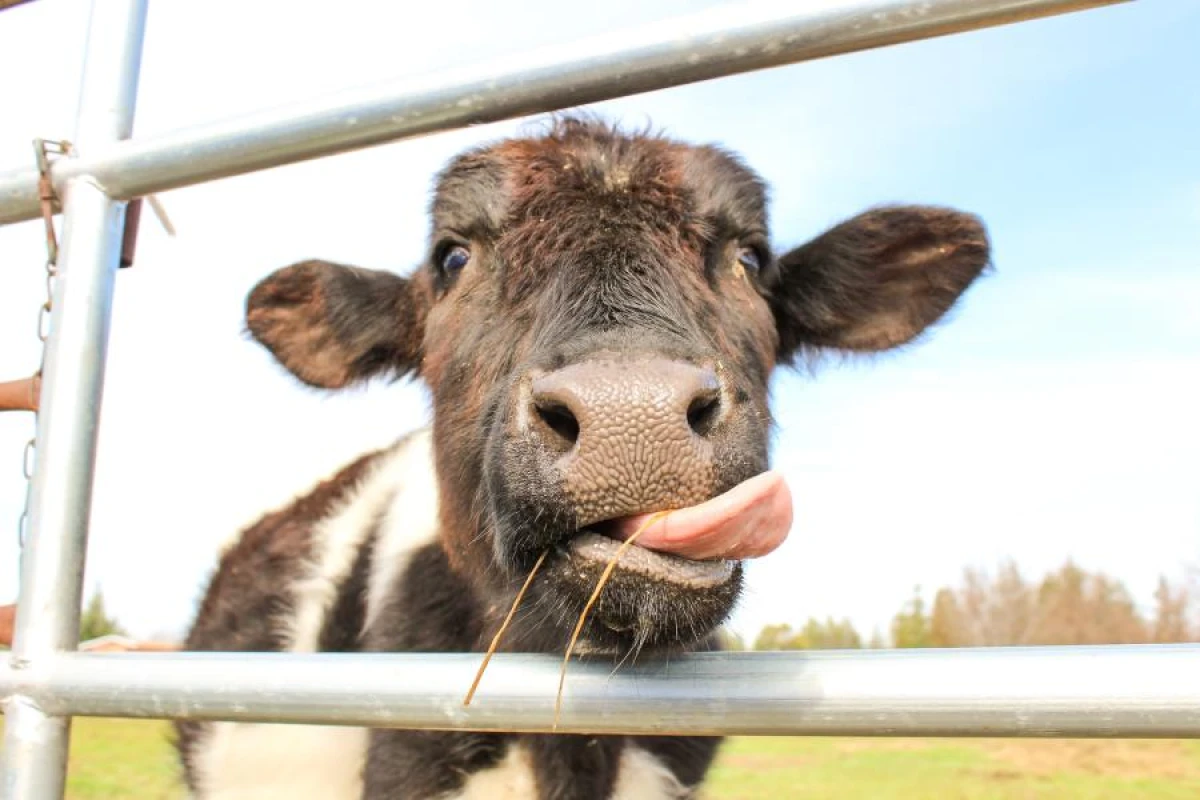
Everyone knows the benefits that cows bring, and those who care for them are well-versed in the nuances of their behavior.
Few people know how domestic cows came to be. Scientists suggest that their ancestors were the mighty aurochs, which inhabited ancient Europe, Asia, and Africa.
The males of the ancient aurochs weighed about 900 kilograms and had huge horns. According to chronicled and folkloric sources, their temperament was unpredictable.
In a rage, a bull posed a danger and could easily lift a hunter on horseback with its horns. A person who defeated an aurochs was held in high regard. Hunting this beast was for a long time a privilege of noble lords, princes, and kings.
The last aurochs died in the autumn of 1627 in the Mazovian forests, in what is now Poland. At that time, no one thought about the fact that a rare species, the ancestor of the well-known domestic animal, was disappearing from the planet.
Historians believe that cattle were domesticated about ten thousand years ago. How exactly the wild aurochs were tamed is not precisely known. Most likely, someone brought back small calves from hunting.
However, it is reliably known that the ancient Egyptians already had numerous herds of bulls and cows. In ancient India, a special breed of humpbacked zebu cows was raised. This breed even caught the interest of the famous conqueror Alexander the Great, who ordered the import of as many as 23,000 Indian cows to Macedonia!
Cows were and are considered sacred animals by many peoples. The Egyptians believed that the soul of the god Osiris resided in the bull, while the divine essence of Isis was embodied in the cow. Interestingly, not all bulls were considered sacred in Egypt.
For a calf to live at the temple, feed on select grain, and bathe in incense, it had to possess thirty sacred attributes. In this case, even after death, it was honored: the dead bull was mummified and placed in a granite sarcophagus weighing no less than five tons.
After the funeral, priests sought a new bull that was to contain the soul of Osiris. The logic of the cult's servants was simple: the soul of the god should not reside in an old body.
In India, the cow was and remains a sacred animal. Killing it is considered a terrible sin. The only way to atone for it is to shave one's head, cover oneself with the skin of the killed animal, and spend a month in the herd. Moreover, the sinner will have to eat the same food that cows eat.
In Greece, the bull was a symbol of the mighty Zeus, and spectacular events involving bulls were held in Crete. Perhaps this is where the famous bullfighting originated.













Leave a comment