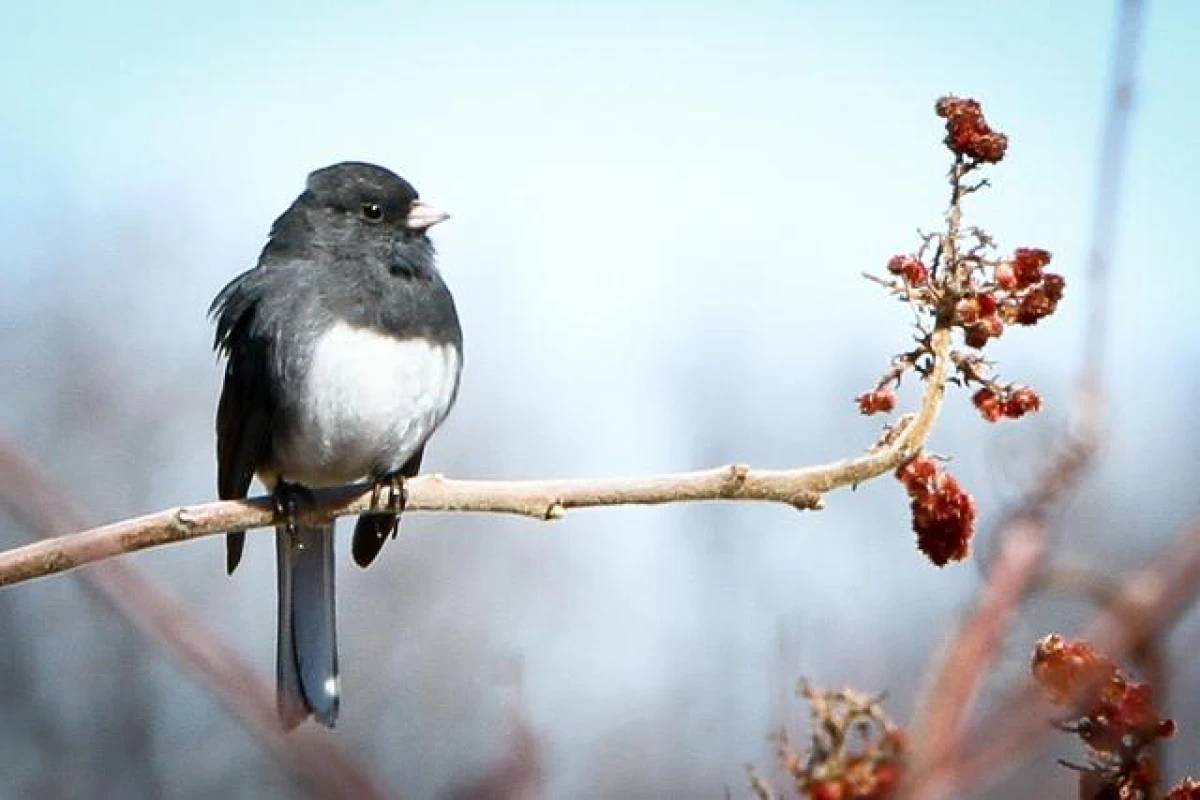
A year ago, we reported that birds dream of flying. At that time, researchers were studying the brain activity of sleeping pigeons that were specially trained to sleep without paying attention to the surrounding equipment.
During rapid eye movement sleep, the part of the brain in pigeons that is responsible for processing visual information was actively functioning, including areas that analyze the surrounding environment during flight. There was also activity in the regions responsible for bodily sensations, especially those that receive signals from the wings. All of this suggests that pigeons are likely dreaming of flying.
A recent article published in the journal Chaos states that birds dream not only of flights but also of songs. This study focused not on brain activity but on the functioning of vocal muscles. In sleeping birds, as in mammals, the muscles contract slightly during sleep; these movements can be recorded using electromyography. However, to analyze further, it is necessary to decipher what these twitches mean and what action the bird is dreaming about. For the leg or wing muscles, this task may not be too complicated, but in this case, it concerns the vocal muscles. Researchers from the University of Buenos Aires developed a method to translate the contractions of vocal muscles into melody, resulting in sounds that birds use to denote their territory and warn competitors of encroachments on their domain.
However, it is important to note which bird was used in the experiment. In this case, it was the great kiskadee from the suborder Tyrannidae. These birds received their name not so much for their songs but for their loud calls, although their vocalizations are quite expressive, and their vocal apparatus is simpler than that of songbirds. The researchers were interested in whether it is possible to determine what a bird sings about in its sleep. It turned out that it is indeed possible. However, whether it will be possible to hear sleeping starlings or nightingales in a similar way will only be known after future experiments are conducted.