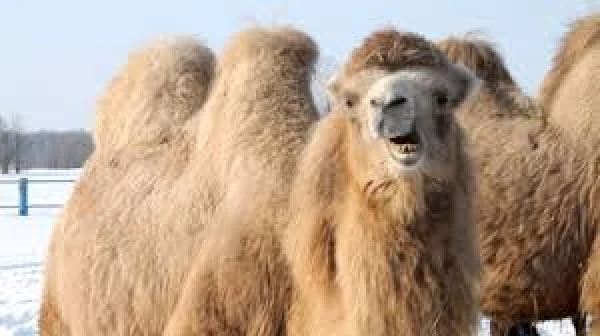
Reconsider your perceptions of camels as grumpy animals living in the desert. These creatures could become a true breakthrough in global agriculture.
The idea of serving coffee with camel milk or cooking steaks from this meat may seem unusual; however, camels have served as a primary source of nutrition for certain communities for thousands of years.
Currently, interest in camels is growing beyond their traditional habitats, and products based on them are beginning to appear on store shelves worldwide.
According to the United Nations, camel milk accounts for about 8% of the total milk production in Sub-Saharan African countries. Moreover, according to market research estimates, by the end of the decade, the global trade volume of camel milk could reach $13 billion, significantly up from $1.3 billion in 2022.
Ariell Ahern, a human geography lecturer at the University of Oxford, notes that in countries like Saudi Arabia, the United Arab Emirates, Kazakhstan, and Mongolia, camel milk is already actively used. Investors see good business opportunities in this, leading to increased funding for new farms in the region.
Why is there a shift towards camels?
2024 has been declared the “International Year of Camels” to highlight why these animals may become part of our future food chain.
Climate change is leading to rising global temperatures, and habitats around the world are becoming increasingly inhospitable for life. Cows will not be able to survive in some regions where a sharp increase in temperature and growing pressure on food security is expected, while camels are able to adapt.
The advantages of using camels in arid climates are evident. These animals are well adapted to harsh conditions. Camels do not need air conditioning as they can tolerate high temperatures, and they process food and water into meat and milk more efficiently than cows, which is critically important in regions where resources are becoming scarce.
“It takes significantly less feed and water to produce one liter of camel milk compared to cow's milk,” Ahern states.
Research supports these claims. In 2022, one study showed that under deteriorating ecological conditions in Sub-Saharan African countries, replacing cattle with camel and goat farms could easily fill the gap. In this scenario, milk production would actually increase, while water and food consumption would decrease. At the same time, greenhouse gas emissions would be reduced.
The primary source of emissions in cattle farming comes from the cows themselves, which emit methane. Studies show that camels produce significantly less of this potent greenhouse gas, which traps 28 times more heat in the atmosphere than carbon dioxide, compared to ruminants.