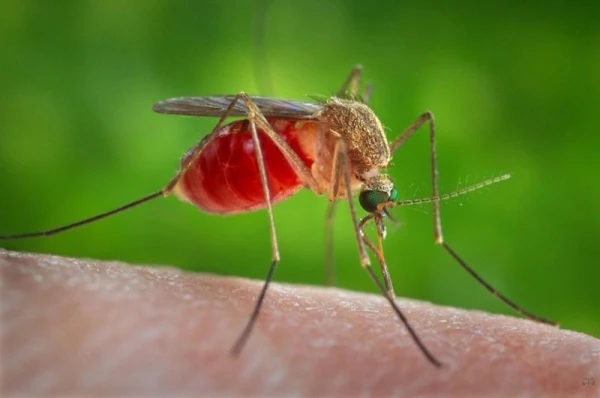
Because the virus loses its viability inside the insect.
For pathogens to survive in an insect's body, they require specific adaptations that develop through evolution. The human immunodeficiency virus (HIV) does not possess such adaptations and loses its activity within just a few minutes in a mosquito's body.
Moreover, a mosquito does not transfer the blood it previously ingested into the body of a new victim. The volume of blood it carries on its proboscis is insufficient to cause an infection. On the external surfaces of the mosquito, HIV loses its viability even faster than in its body.