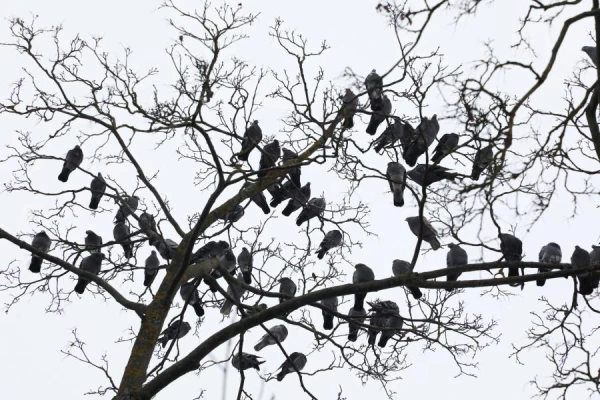
Ornithologists have updated the genealogical tree of birds and identified patterns in their evolutionary history following the mass extinction that occurred 66 million years ago.
The task that ornithologists have set for themselves is impressive. They aim to "reconstruct the complete evolutionary history of all birds" and compile draft genome sequences for approximately 10,500 currently existing species of birds. As reported by the authors of the study published in the journal Nature, they will be assisted by a set of algorithms specifically designed to determine evolutionary relationships, called ASTRAL.
This meticulous approach has allowed scientists to create a new and improved genealogical tree of birds that describes the complex branching with remarkable accuracy and detail. In particular, ornithologists were able to closely examine the evolutionary relationships among various bird species and noted that after the Mesozoic-Paleogene extinction, the population sizes and relative brain volume of early birds significantly increased.
However, the scientists noted that even such an extensive amount of genomic data did not uncover all the mysteries of the avian world. The new analysis was unable to confidently establish the familial relationships of the hoatzin—a unique bird and the only surviving representative of its genus, which is considered one of the most astonishing inhabitants of South America.