Researchers from the Okinawa Institute of Science and Technology in Japan have concluded that in the future, humans may evolve to the point where their saliva becomes venomous. The genetic foundations necessary for the emergence of oral venom are already present in both reptiles and mammals.
“Venoms are a mixture of proteins that animals use to paralyze and kill their prey, as well as to defend against threats,” shares the opinion of the first author of the study, Agnish Barua. “Interestingly, venom has arisen in many animals during the course of evolution: jellyfish, spiders, scorpions, snakes, and even some mammals. Although these creatures have different methods of delivering venom, the oral system, where venom is injected through a bite, is one of the most common.”
Previously, scientists studying the genetic aspects of venoms focused on the genes responsible for synthesizing the proteins of the toxic mixture. In a recent study, the authors analyzed the interactions of various genes to identify those that contributed to the formation of venomous systems.
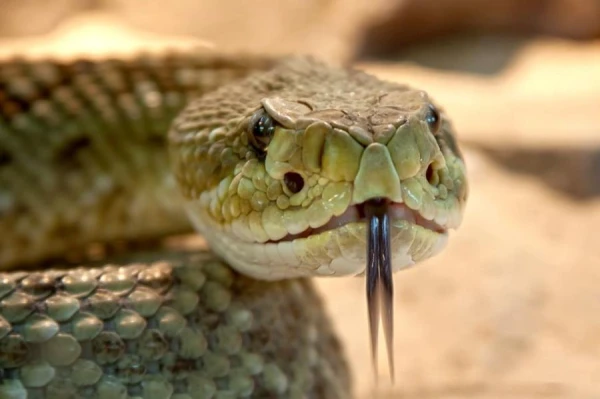
By studying the venom of the sharp-nosed puff adder, researchers discovered about 3000 “cooperating” genes that play a crucial role in protecting cells from stress caused by high levels of proteins. These genes were also key in regulating protein modification and folding. These are critically important genes, as misfolded proteins can accumulate and harm cells. A reliable system is required for venom production to ensure that the venom works to your advantage.
The scientists then examined the genomes of other animals, including mammals such as dogs, chimpanzees, and humans, and found that they contain their versions of these genes. Thus, the researchers believe that the salivary glands of mammals and the venom glands of snakes share an ancient functional core that has been preserved since the two lineages diverged hundreds of millions of years ago.