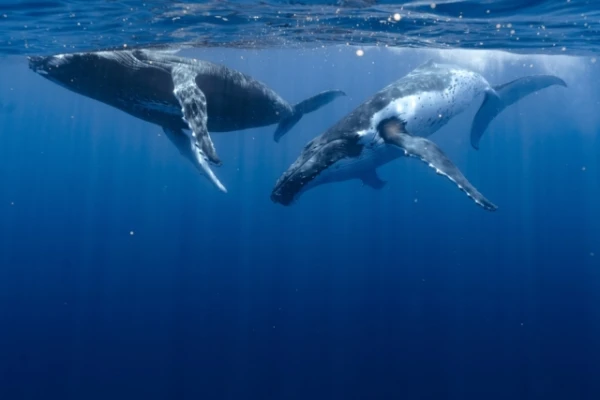
Whales are considered some of the most impressive inhabitants of the planet. They amaze not only with their size but also with their behavioral traits, origins, and body structure. Some facts about them seem so unusual that they appear almost unbelievable.
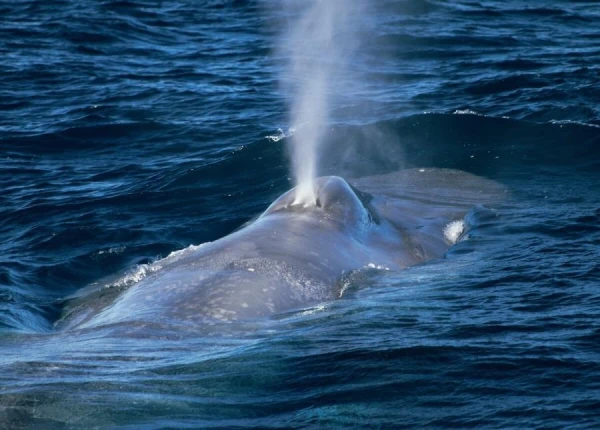
The largest animal known to exist on Earth is the blue whale. Its length can reach approximately 30 meters, and its weight can be around 150 tons. Even individual organs of this giant have impressive parameters: the heart weighs about 180 kilograms, and the diameter of the aorta is approximately 25 centimeters.
Equally unusual is the ability of whales to produce complex sound sequences. Some of these "compositions" last about ten minutes. Moreover, the same set of sounds can be repeated many times in a row — sometimes for several hours and even an entire day.
The history of whale evolution is also unusual. Their ancient relatives are considered to be Pakicetus — four-legged hoofed animals. They lived more than 50 million years ago along the shores of water bodies in what is now India and Pakistan. These predators hunted small terrestrial animals and freshwater fish, and they could also hear underwater. Over time, they began to spend more and more time in the water, their limbs gradually transformed into fins, and their hind legs shrank. Modern whales retain rudimentary pelvic bones — a reminder of their terrestrial past.
Some members of the cetacean family are known for their deep dives. For example, sperm whales can dive to depths of over one kilometer, hunting for cephalopods there. To navigate in complete darkness, they use clicks: the sounds bounce off surrounding objects and help the animals determine their position in space.
Interestingly, even the name of the largest whale does not quite accurately reflect its appearance. The blue whale actually has a gray-blue coloration. The upper part of its body usually appears darker than the lower part. The blue hue becomes noticeable in clear seawater under certain lighting — which is why the animal got its name.