
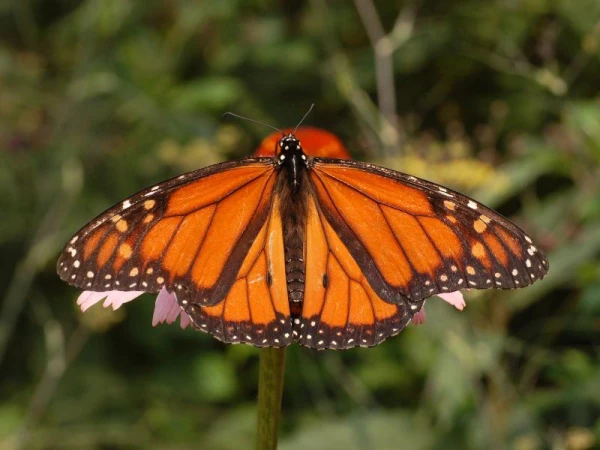
Excess sodium content in plants contributes to increased musculature in male butterflies, while female butterflies experience growth in brain and eye size.
Road salt, used for treating roads and sidewalks during the winter, does not disappear with the arrival of spring: it dissolves and penetrates the soil, spreading through the ecosystem. Given the volume of salt that municipal services use each year, a natural question arises about its impact on the plant and animal world.
First and foremost, the effects of salt are felt by the plants growing along the roads and the insects that feed on them. Ecologists from the University of Minnesota conducted a study to assess the sodium levels in plants growing near urban highways. The results showed that after snowy winters, the sodium content in plant tissues increased from 1.5 to 30 times, which is associated with the active use of de-icing salts. However, the researchers did not limit themselves to just plants. They conducted an experiment in which caterpillars of monarch butterflies and cabbage whites were placed on a high-salt diet; they were then compared with caterpillars that fed on the same plants but without added salt.
Caterpillars that fed on “salty” plants turned out to be larger than their “salt-free” counterparts. The survival rates of both groups were similar but slightly differed: 40-50% of the “salty” caterpillars survived, while 58% of the “salt-free” ones did. However, the differences became more pronounced when the caterpillars turned into butterflies, favoring the “salty” individuals. Male butterflies that fed on salty plants in their youth developed greater musculature, while females had larger eyes and brains. These changes are undoubtedly beneficial: muscular males can fly longer and farther in search of mates, while females with larger eyes and developed brains can better select plants for laying eggs. Sodium salts are essential for muscle and brain formation, which explains why excess salt promotes the “accelerated” development of butterflies.
However, when the researchers increased the salt levels in the plant feed, the situation changed dramatically: the survival rate of the caterpillars dropped to 10%, indicating the toxicity of salt. It is hoped that the amount of salt used on roads benefits butterflies only. However, there are reasons to believe that the salt content in roadside plants may exceed a dangerous threshold, and butterflies, instead of becoming stronger and smarter, may begin to die out. The researchers emphasize in their article in the Proceedings of the National Academy of Sciences that their studies focused only on plants along regular roads, and for a more complete picture, it is necessary to study those growing along major highways and thoroughfares. Much more salt is used on such roads, and the plants there could become toxic to caterpillars.











Leave a comment