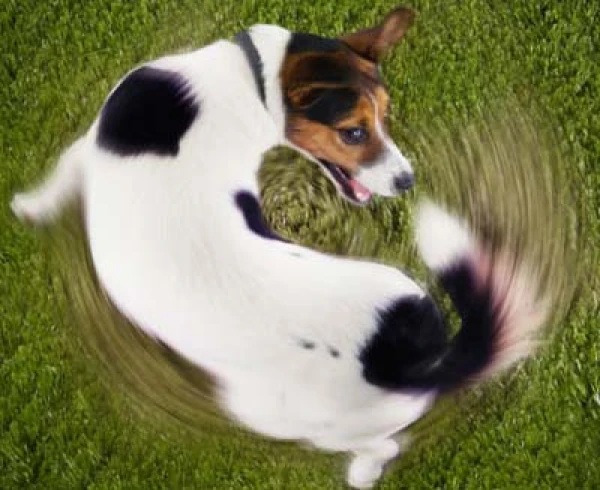
There is a belief that dogs wag their tails to show their joy and friendliness, but this is not entirely accurate. Indeed, dogs use their tails for communication; however, wagging does not always signal a desire to be petted.
Dogs have a unique language based on the position and movement of their tails, which allows them to interact with the surrounding world. This movement reflects various emotional states of the animals.
For example, when a dog is in a relaxed state, its tail assumes a 'natural' position. However, this position is not universal for all breeds. Most dogs have tails that simply hang down, while pugs may have theirs curled up, and greyhounds may keep theirs slightly tucked between their legs. If a dog stretches its tail out, making it an extension of its body, it indicates that the dog is interested in something and is curious.
If a dog is feeling nervous or submissive, its tail will be positioned lower than its natural position. In the case of fear, the tail hides under the body. If the tail is raised higher than usual, it indicates that the dog is excited and engaged. However, be cautious: a tail held straight up can indicate aggression.
But what does tail wagging mean? It is believed that this action is related to excitement. In 2007, researchers found that the way a dog wags its tail reflects its emotional state. For example, wagging the tail to the right indicates positive emotions, while wagging to the left indicates negative ones.
This is linked to the fact that the left hemisphere of the brain controls the right side of the body and vice versa. Studies of the behavior of other animals have shown that the left hemisphere is associated with positive feelings, while the right is associated with negative ones.
Interestingly, a 2013 study showed that dogs are capable of understanding asymmetrical tail wagging in other dogs! When they see another dog's tail wagging to the right, they relax, but if it is directed to the left, they experience stress.