
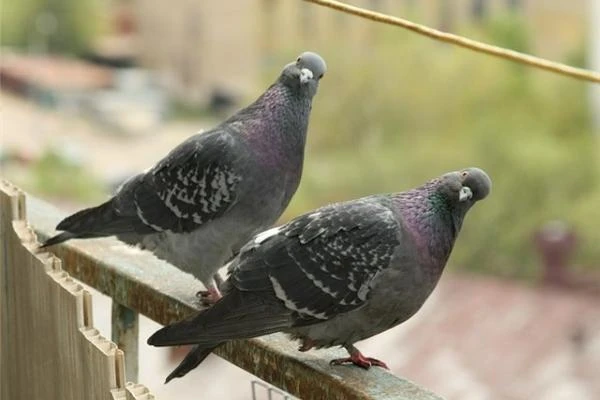
Wild animals living near humans gradually get used to them and become less cautious — or at least their fear significantly decreases. A striking example is urban pigeons and sparrows, which allow people to approach them closely, and sometimes pigeons do not even notice when someone steps on them.
However, do all animals adapt to humans equally? Obviously not: some quickly lose their fear, while others cannot get used to the presence of humans. A group of researchers from New Zealand, Brazil, and Australia, led by Daniel T. Blumstein from the University of California, Los Angeles, sought to determine whether there are patterns in this process. They analyzed 75 scientific papers covering more than two hundred animal species, predominantly birds, but also including mammals and reptiles such as lizards. In each case, the researchers were interested in the minimum distance at which the animal allowed a human to approach.
The results showed that the minimum flight distance depends on many factors, such as the type of terrain (open or rugged, wooded), diet, and the number of eggs in a clutch. However, two factors turned out to be the most significant. First, urban birds are much more tolerant of humans than their rural counterparts — this is quite expected. Second, the size of the birds also plays an important role: larger species are generally more tolerant of humans than smaller ones. The sizes of the birds ranged from hummingbirds, representing small species, to seagulls and pelicans, which are considered large.
As the authors of the study note, in the wild, large birds are generally more cautious when humans appear than small ones. However, when it comes to constant contact and prolonged coexistence with humans, large birds adapt more quickly and allow people to approach closer. It is likely that for large birds, constant anxiety and readiness to flee are more costly than for small ones, which is why pelicans, gulls, and other large species adapt to humans more easily, especially if the latter behave peacefully. The results of the study were published in the journal Nature Communications.
These findings could be useful in the fields of conservation and urban ecological planning: if we want different animals (not just pigeons, dogs, and cats) to live near us, we need to develop behavioral norms that are acceptable for both us and them. However, this currently only pertains to birds; similar patterns may also exist in the relationships of other animals with humans, but more extensive statistics are required to confirm this.











Leave a comment