
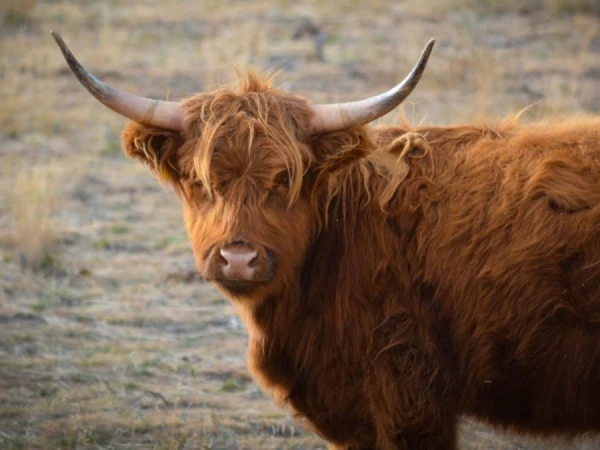
The government of the Tibet Autonomous Region has made an important statement. Scientists in China have cloned Tibetan cows for the first time, which are endangered.
Specialists have cloned two species of cows that inhabit the Tibetan Plateau using the somatic cell nuclear transfer method.
Yui Dawei, a researcher at the Animal Husbandry and Veterinary Research Institute of the Chinese Academy of Agricultural Sciences, commented on this discovery. According to him, for cloning, scientists had to take samples of ear tissue from two species of cows. Then, a fibroblast line was created in the laboratory, which allowed for the production of cloned embryos using the somatic cell nuclear transfer technology. These embryos were 'implanted' into surrogate cows, and as a result of the pregnancy, eight cloned cows were born.
Chinese researchers do not intend to stop at this achievement. They plan to combine cloning technologies with livestock breeding methods, which will allow for the creation of an ideal genetic system and improve resource protection and utilization.
Unique conditions have formed on the Tibetan Plateau, to which local birds, animals, and plants have adapted. For example, wild yaks, or Bos mutus, inhabit the steppe meadows and alpine tundra. This animal is considered the ancestor of the domestic yak but is currently regarded as a separate species. Yaks can reach two meters in height and weigh between 0.5 and 1.2 tons, and they can run at speeds of up to 40 km/h. These animals are well adapted to cold high-altitude conditions, have smaller lung volumes compared to ordinary cows, and a greater number of small red blood cells, which facilitates faster oxygen transport. Their undercoat is soft, and their fur is long, allowing them to survive at temperatures down to minus forty degrees Celsius.
The population of yaks has sharply declined due to intensive hunting by humans in the 20th century. Extraordinary measures have been taken to preserve this species in Tibet. Currently, the population is gradually recovering; however, yaks prefer to inhabit areas with accessible food where they do not have to compete with domestic livestock.










Leave a comment