
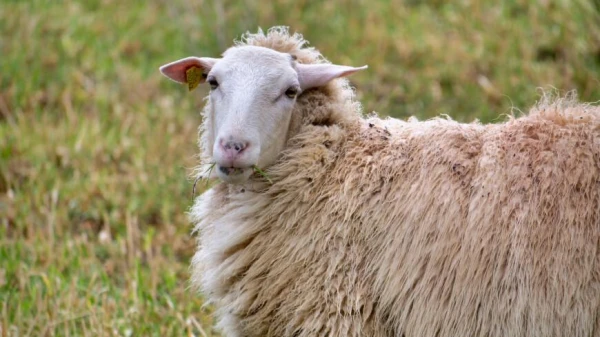
Chinese researchers have successfully cloned a Tibetan sheep for the first time. The animals were born in Qinghai Province in the northwest of the country.
A group of scientists from Northwest A&F University and the Animal Disease Prevention and Control Center in Xining, the capital of Qinghai Province, conducted a study in which somatic cell cloning technology was applied to high-yield individuals. As a result, two sheep were born, as reported by CCTV.
The researchers selected three high-yield rams and one ewe from a professional shepherd cooperative. One of them was an Ewe of the Euler breed, weighing over 400 kg and having won multiple awards at sheep breeding competitions. From these animals, 43 cloned embryos were obtained, which were then implanted into surrogate mothers. The survival rate was 58.1% in the first study and 37.2% in the second, conducted 120 days after transplantation, the scientists noted.
So far, only two lambs have been born, but the researchers are confident that more will appear soon.
The scientists believe that the use of cloning methods will increase farming efficiency in this region. Sheep farming is a primary source of income for many local residents. However, as the researchers point out, the efficiency of breeding Tibetan sheep leaves much to be desired, and the utilization rate of high-yield breeding rams is low.
Since 2018, with the support of the Qinghai Provincial Department of Science and Technology, researchers have been studying the embryo transplantation technologies for Tibetan sheep. The scientists plan to continue experiments aimed at forming a herd of larger individuals that will produce more valuable wool, as commented by Su Jianming, a professor at the College of Veterinary Medicine at Northwest A&F University. His words were reported by the Daily Mail.
He added that in the next stage, the scientists intend to refine the technology for transplanting frozen embryos.
It is worth noting that this is not the first successful case of cloning rare agricultural animals in Tibet. In 2020, scientists from the Tibet Agricultural and Animal Husbandry University (TAAHU) cloned a Tibetan pig for the first time using somatic cell transplantation methods, as previously reported by the Chinese news agency Xinhua.
At the end of January, it became known about the successful cloning of bulls of the endangered Tibetan breeds Zhangmu and Apeijiaza. These breeds inhabit the autonomous region of Sizan at an altitude of 3,500 meters above sea level. The scientists obtained four bulls of each breed, as previously reported by China Daily.














Leave a comment