

To achieve this goal, several teams of scientists are currently working around the world.
The world in which people can have conversations with cats, dogs, and other animals is becoming a reality — claim developers of trainable artificial intelligence models for interacting with animals. As part of various projects around the world, extensive databases have been compiled containing sounds, movements, and facial expressions of many species — from pets to bats and whales. Based on this data, AI is developing a 'translator' that will be able to translate their language into ours and vice versa. According to experts, we are on the verge of a significant breakthrough, and the 'Disney dream' of being able to communicate with our smaller brothers may come true in the next 12–36 months.
AI Will Figure It Out
Teams working on projects aimed at deciphering the 'speech' of animals apply what is known as digital bioacoustics. They set up portable sensors to record sounds, movements, and behaviors — all of which we either do not notice or cannot capture. The collected information is fed into databases, which are then used to train artificial intelligence. The computer matches the data to decipher these tiny messages and translate them into a language more understandable to us.
Experts from the Earth Species project are thus creating maps of animal vocalizations, including those of cats, dogs, birds, and whales. Additionally, they are trying to develop new vocalizations for our responses. According to scientists, this will take about a year.
“We could create a synthetic whale or crow that speaks in the language of a real whale or crow in such a way that the animals would not understand they are communicating with a non-member of their species,” notes Aiza Raskin, developer and co-founder of the Earth Species Project.
“The intrigue is that we can start a conversation before we understand what we are talking about. We believe that in the next 12–36 months we will be able to do this for communicating with animals,” the scientist stated in April 2023.
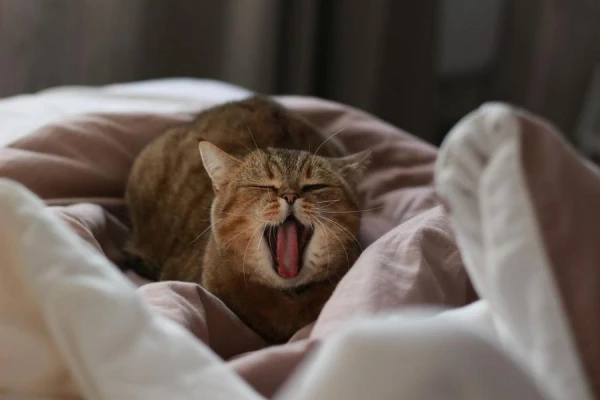
Researchers from the University of Lincoln (UK) have focused on classifying and understanding animal facial expressions. Their machine learning model may finally help humanity unravel the mystery — what cats think. AI is trained to identify movements and features characteristic of cats, such as ear, whisker, tail movements, squinting eyes, or nose twitching.
By correlating these with the animals' actions, the computer recognizes and remembers what each combination means. Over time, this will help us understand hundreds of expressions on their faces and movements that cats use to communicate.
Whales, Dogs, Bats
Biologist and animal behavior specialist Kon (Konstantin) Slobodchikov, a professor at Northern Arizona University, founded the Animal Language Institute, where they similarly study the facial expressions and barks of dogs. He is developing an artificial intelligence model for future translation from dog language to human and back.
Slobodchikov, who has studied prairie dogs for about forty years and proved their complex communicative abilities, then used the results of his research to study the behavior of domestic dogs and help owners solve emerging problems. According to the scientist, when we understand animals, we can learn many amazing facts, such as that “dogs have their own thoughts, hopes, and perhaps dreams.”
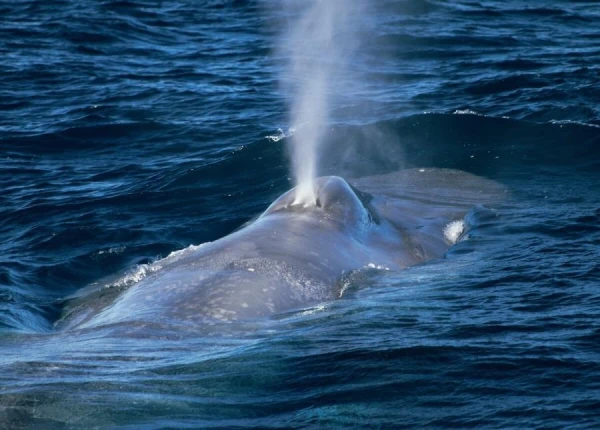
AI models are also capable of distinguishing and classifying ways of animal communication that humans cannot perceive. For example, sounds of bats that are inaudible to our hearing or clicks of giant whales.
A team of scientists from Tel Aviv University presented a program for recognizing and analyzing about 15,000 bat calls. The machine learning algorithm matched these sounds with video recordings to understand what they are talking about. Thus, researchers learned that bats have a much more complex language than we could imagine: they 'argue' over food, have names, and the young repeat what their mothers say to learn.









Leave a comment