
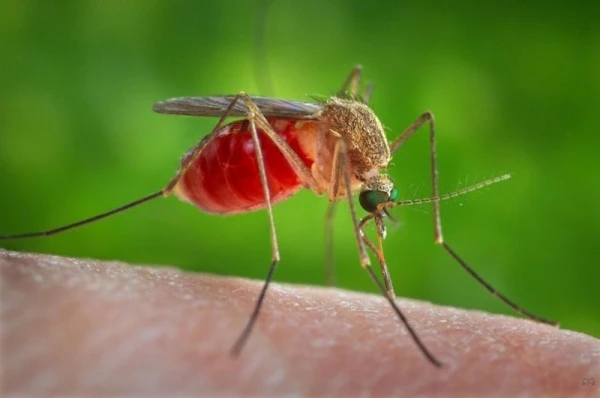
Researchers from the University of Melbourne made an important discovery. They found that mosquitoes can transmit the microbe causing Buruli ulcer from opossums to humans. This is reported by the journal Nature Microbiology.
Buruli ulcer is an infectious disease that is still not well understood. It is believed that its causative agent is Mycobacterium ulcerans. The disease manifests as ulcers on the skin in the areas of extensor surfaces (such as on the elbows and knees), which contain necrotic material at the base. The ulcer develops after a mosquito bite. Over several months, the bite site turns into an ulcer, destroying the surrounding tissues.
The causative agent is an acid-fast microorganism that develops very slowly. This characteristic is also typical of other species of mycobacteria. The growth of visible colonies when cultured on nutrient media takes from seven to twelve weeks. So far, scientists have not determined in which natural reservoirs mycobacteria reside. They may be found in stagnant water, on aquatic plants, and animals (such as kangaroos, koalas, and opossums).
In Melbourne, a decision was made to investigate known species of mosquitoes. Researchers set out to determine whether they carry the pathogen and if there is a connection with humans and infected opossums. Through molecular testing, they found that the species Aedes notoscriptus, which inhabits Australia, tested positive for the bacteria. First, they bite an animal, the carrier of the microorganism, and then a human, infecting them through the bite. Given the findings, scientists offered two pieces of advice: first, the best protection against mosquito bites is clothing that covers the entire body; second, the use of special repellents.











Leave a comment