
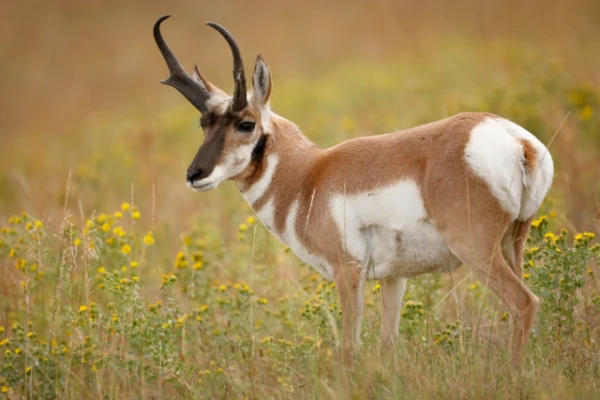
A new study from the University of Michigan debunks the classic theory that the phenomenal speed of the pronghorn antelope—the fastest land animal in North America—developed in an 'arms race' with the extinct American cheetah.
An analysis of the fossilized ankle bones of the ancestors of pronghorns, which lived more than 12 million years ago during the Miocene epoch, revealed that key anatomical adaptations for speed (including a short talus bone) developed long before the emergence of this predator. Scientists concluded that high speed was an evolutionary survival strategy not due to predation, but in response to a changing climate: the ability for rapid and long-distance migrations allowed animals to move between fragmented forest areas and water sources as the landscape dried out.
This glimpse into the distant past shows that pronghorns possess an inherent resilience to environmental changes, but it also serves as a warning. The history of their ancient relatives, who ultimately went extinct, demonstrates that even the most advanced adaptations may not save a population if ecosystem changes become too abrupt and rapid.












Leave a comment