According to Darwinian theory, after billions of years of evolution, simple cellular organisms transformed into humans. However, it seems that the distance from monkey to human is just one step.
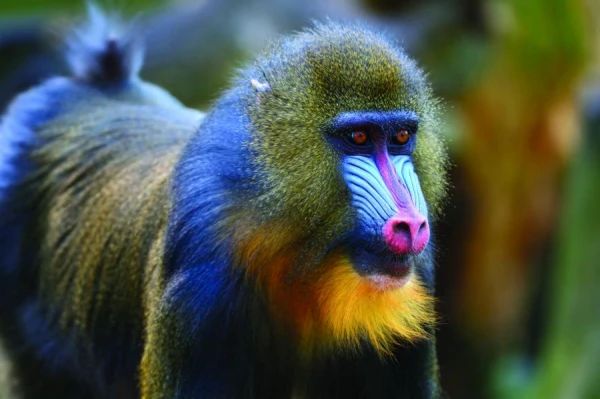
Today we coexist with animals that, according to evolutionary theory, are the ancestors of our species. However, monkeys have inhabited the planet for much longer than we have and, for some reason, do not show a desire for evolution, even when we show them our tools and teach them arithmetic. Opponents of evolutionary theory, far from science, use this fact to refute Darwinism. However, let us not follow their example and try to understand the essence of the issue.
It is known that humans evolved from monkeys. But from which ones, if there are so many species? It is believed that one of the oldest ancestors of humans is the genus Australopithecus or Paranthropus. These groups possessed the necessary characteristics to 'kickstart' the evolution of a more intelligent species; however, they are not observed on Earth today. Of course, other species of monkeys could also have evolved, but what prevents them? The main reason is the lack of necessity. The ancestors of humans began to evolve in response to climate changes. In extreme environments, only the smartest and strongest individuals survived, leading to increasingly intelligent hominids with each generation.
It is also worth noting another important reason: today, the ecological niche that monkeys could occupy is already filled by us. Previously, alongside Homo sapiens, there were other species of ancient humans on Earth. However, for various reasons, Homo sapiens was able to eliminate them from the face of the planet — some were destroyed by our ancestors, while others were interbred, 'dissolving' their genetic code into our own.
We should not forget that nature took over a million years for the evolution of monkeys into humans. Perhaps we just need to wait, and then primates will evolve into a new species and become our competitors.