
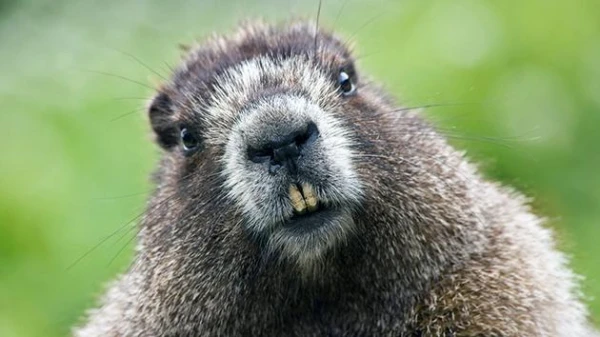
How the distribution of magnesium and iron ions in tooth enamel affects its characteristics, and how beavers differ from rabbits and other rodents.
The familiar sound of a dental drill evokes certain associations. Unlike sharks, whose teeth are renewed throughout their lives, humans and most mammals only change their teeth once—from baby teeth to permanent ones. However, rodents have teeth that grow continuously. This is because, as cliché as it may sound, rodents gnaw, thereby evenly wearing down their teeth. To ensure these animals do not lose their primary survival tool, nature has equipped them with a mechanism for continuous tooth growth that compensates for wear. But what about those who only get their teeth once for a lifetime? Researchers from the Department of Materials Science and Engineering at Northwestern University have determined which elements enhance the strength of tooth enamel and found out why beavers can handle trees just as well as a chainsaw.
Tooth enamel is the hardest tissue in the human body. Its foundation consists of thin long fibers of hydroxyapatite. The thickness of one such fiber is only 50 nanometers, while its length is a thousand times greater. For perspective, if the height of a birch tree were a thousand times greater than its diameter, the tree would reach a height of about one kilometer. Thousands of these fibers combine into bundles that, despite their thinness, are twenty times thinner than a human hair. These bundles are arranged in a specific direction, forming a kind of reinforcing framework for tooth enamel, and the space between them is filled with crystalline hydroxyapatite.
Hydroxyapatite is a mineral that contains calcium, phosphate, and hydroxyl ions. Although enamel is almost entirely composed of a mineral base, even small amounts of other ions can significantly alter its properties. For example, if some calcium is replaced with magnesium ions, even in small quantities, the enamel becomes more vulnerable to acids. Simply put, it will dissolve more quickly. The same effect is observed when phosphate ions are replaced with carbonate. However, if phosphate ions are replaced with fluoride ions, the enamel significantly improves its characteristics. This is why fluoride-containing substances are included in toothpaste.
So where does the acid that negatively affects teeth come from, and why is sweet, even if not acidic, harmful? The fact is that there are bacteria in the mouth that, while not threatening to the body, can harm tooth enamel. Sugar residues serve as food for these microorganisms. Everything would be fine if these bacteria did not convert sugar into lactic acid, increasing the acidity of the environment. The more acidic the environment, the faster tooth enamel deteriorates. Yes, this is the same acid-base balance. Beavers, as far as we know, do not indulge in sweets, but nature has still equipped them with an additional mechanism that makes their teeth stronger. It all comes down to those very ions that alter the properties of enamel.
The researchers analyzed samples of tooth enamel from mice, rabbits, rats, and beavers using sophisticated equipment. They studied the structure of the fibers that make up the enamel and discovered an interesting fact. It turns out that the strength and acid resistance are primarily influenced by an amorphous substance containing minerals rich in iron or magnesium. Although the proportion of such a substance is extremely small, it radically changes the protective properties of the enamel. For example, beaver tooth enamel was found to be six times more resistant to acid than rabbit enamel. This is achieved thanks to iron compounds, mainly ferrihydrite. It not only provides chemical stability but also increases the mechanical strength of tooth enamel. One could say that beavers truly have 'iron' teeth!
However, why has no one yet created toothpaste with iron-containing minerals? While we may not need to gnaw on aspen branches, reducing visits to the dentist would certainly be pleasant. If you look at a beaver's teeth, you will notice that they are far from white—they have a yellowish or even brownish tint. These are absolutely healthy and strong teeth, and their color is due to the iron compounds. From a human perspective, this is not very aesthetic, but it seems beavers do not worry too much about it.










Leave a comment