
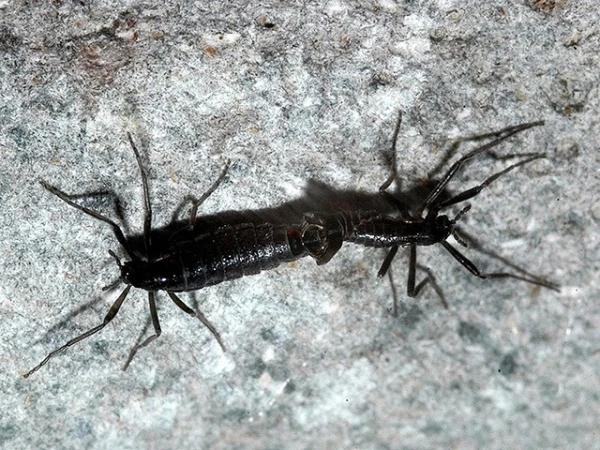
During the expedition, the team collected larvae at 20 different locations.
An international team of scientists has discovered that the only native insect of Antarctica is already consuming microplastics, despite living in one of the most remote and isolated corners of the planet. The study published in the journal Science of the Total Environment is the first of its kind to examine the impact of microplastics on Antarctic insects and the first to confirm the presence of plastic particles in wild-caught midges.
The focus of the study is the species Belgica antarctica – a non-biting midge about the size of a grain of rice. It is the southernmost insect on Earth and the only species that is completely endemic to Antarctica. The larvae of this species live in moist patches of moss and algae along the Antarctic Peninsula, with densities in some areas reaching nearly 40,000 individuals per square meter. Feeding on decaying plant matter, they play a crucial role in nutrient recycling and maintaining the functioning of the fragile soil ecosystem.
Although Antarctica is often considered untouched wilderness, previous studies have found plastic particles in freshly fallen snow and in adjacent marine waters. Their concentration is lower than in most other regions of the planet, but plastic still reaches the continent through ocean currents, wind, and human activities related to research stations and vessels. To determine how microplastics affect insects, the scientists conducted a series of laboratory experiments. The initial results were unexpected. Even at the highest concentrations of plastic, the insects survived. Their basic metabolism did not change. At first glance, everything seemed fine.
However, a more detailed analysis revealed hidden consequences. The larvae exposed to high concentrations of microplastics showed reduced fat reserves, although carbohydrate and protein levels remained unchanged. Fat is essential for energy storage, especially in the harsh conditions of Antarctica.
The researchers suggest that due to slow feeding in the cold environment and the complex structure of natural soils, the larvae are actually ingesting only a limited amount of plastic. Since conducting experiments in Antarctica is challenging, the exposure was studied for only 10 days. Longer studies are needed to understand the long-term effects of microplastics on insects. In the second phase of the study, the scientists posed a simple yet critically important question: do Belgica antarctica larvae absorb microplastics already present in their natural habitat?
During the expedition along the western coast of the Antarctic Peninsula, the team collected larvae at 20 different locations on 13 islands. All samples were immediately preserved to prevent further plastic consumption. The team meticulously dissected the five-millimeter larvae and examined the contents of their intestines using advanced imaging methods capable of detecting chemical "fingerprints" of particles as small as four micrometers – significantly smaller than the human eye can discern. During the analysis of 40 larvae, the scientists found two fragments of microplastic.
Although this may seem insignificant at first glance, the researchers view the finding as an early warning signal. The level of microplastics in Antarctica is still much lower than in most regions of the planet. However, the study shows that while plastic is not yet saturating these soil communities, it is already entering the system. At higher concentrations, it can disrupt the energy balance of the larvae.









Leave a comment