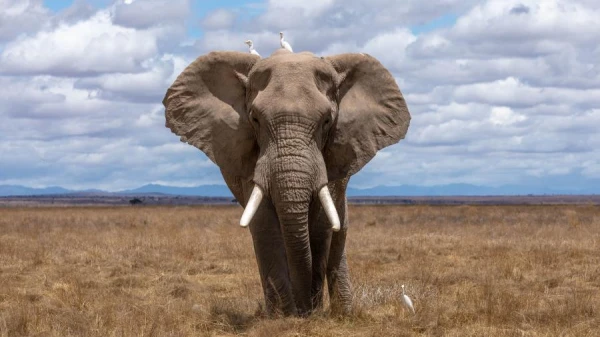
Several dozen anti-tumor genes protect elephants from oncological diseases.
Cancer affects not only humans but also animals, manifesting in various ways: some species suffer more frequently, while others less so. Interestingly, among the most cancer-resistant are the largest mammals, such as elephants and whales. Why is this surprising? The fact is that cancer arises from cells in which the division control mechanism is disrupted. Logically, the more cells there are in an organism, the higher the likelihood of errors occurring during division, for example, in the process of DNA synthesis. However, elephants, despite their size and lifespan, develop cancer even less frequently than smaller species. This phenomenon is known as the “Peto's paradox,” named after British epidemiologist Richard Peto, who noted it back in the 1970s.
It is evident that long-lived large animals possess additional mechanisms that suppress the development of malignant tumors. Among the genes that influence cancer are proto-oncogenes and anti-oncogenes. If proto-oncogenes start functioning improperly, cells can transform into cancerous ones, just as a malfunction in anti-oncogenes, which control cell behavior, can lead to cancer.
Two years ago, researchers from the Institute of Development in Montpellier proposed a model that considers the behavior of proto-oncogenes and anti-oncogenes depending on the size of the animal. The model simulated various distributions of mutations over thousands of generations. The results showed that proto-oncogenes and anti-oncogenes respond differently to increases in body mass during evolution. The larger the body mass, the more difficult it is to activate genes capable of causing tumors.
One mutation that complicates the activation of proto-oncogenes may be associated with an increase in the number of tumor suppressors in the genome. This is reported by Joshua Schiffman from the University of Utah and his colleagues from Arizona State University and the University of Pennsylvania in their article in the Journal of the American Medical Association. By studying elephant mortality statistics, the authors confirmed that these animals are indeed more resistant to cancer than many other species: only 5% of pachyderms die from tumors, while the figure is 8% for hyenas and 25% for humans.
Genomic studies have shown that African elephants have 40 copies of the p53 gene, while Asian elephants have between 30 and 40. This gene is one of the most well-known anti-oncogenes. The p53 protein recognizes damage in DNA and, if it becomes excessive, activates genes responsible for apoptosis – programmed cell death. The presence of a large number of genetic damages makes a cell dangerous to the organism, so it is easier to eliminate it. Clearly, it is the large number of p53 copies that arose in the elephant genome millions of years ago that helps them avoid cancer (humans have only two copies of p53).
There are other approaches – one can attempt to repair damaged DNA. However, when elephant cells were exposed to ionizing radiation, activation of the genes and proteins responsible for DNA repair was not observed; instead, the cells began to die actively. Thus, elephants prefer to avoid malignant tumors by simply destroying damaged cells. One can only lament that evolution did not endow our genome with additional copies of p53; perhaps in the future, biotechnology will allow for such an operation, and people with enhanced cancer protection will emerge.
Another animal worth mentioning, whose resistance to cancer has long intrigued biologists, is the naked mole rat – this unattractive-looking African rodent lives extraordinarily long, up to 28–31 years, which is ten times the lifespan of ordinary laboratory rats, and does not suffer from malignant tumors. Two years ago, a group from the University of Rochester, led by Andrei Seluanov and Vera Gorbunova, published an article in Nature claiming that the naked mole rats' resistance to cancer is linked to a high content of hyaluronic acid filling the intercellular matrix – it prevents cell adhesion and tumor formation. At the same time, their evolutionary relatives, the blind mole rats, also known for their resistance to cancer, follow the “elephant” path: the cells in their bodies adhere to a strict apoptosis program that causes them to die if the number of cells becomes too large.